2026 Lexus TX
Quiet confidence meets three-row luxury, but is it enough to be called a Lexus?
Overview
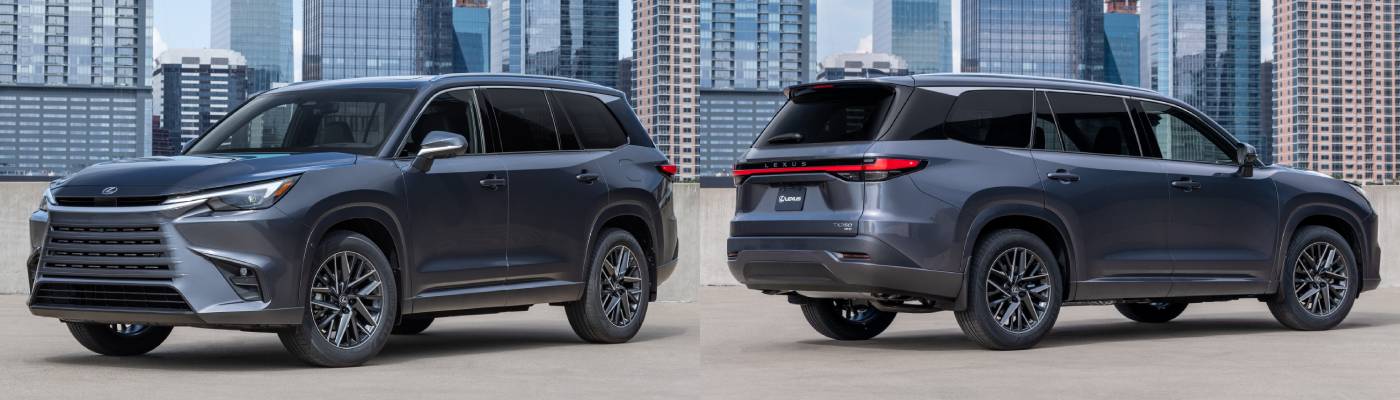
The 2026 Lexus TX enters its sophomore year as Lexus' dedicated three-row SUV, filling the gap left by the discontinued RX L and slotting between the RX and GX in the lineup. Built on Toyota's GA-K platform, it shares architecture with the Toyota Grand Highlander but distinguishes itself with Lexus' design language and upscale appointments. The TX is offered in seating for six or seven, depending on whether buyers opt for a second-row bench or captain's chairs. Competing in the luxury large SUV segment, its rivals include the BMW X7, Cadillac Escalade, Genesis GV80, Infiniti QX80, Jeep Grand Wagoneer, Land Rover Range Rover, and Mercedes-Benz GLS-Class. For 2026, Lexus adds minor refinements such as new exterior colors and modular cupholders in the third row, while retaining the broad trim lineup introduced at launch.
Powertrain choices span three distinct offerings. The TX 350 employs a 2.4-liter turbocharged four-cylinder producing 275 horsepower and 317 lb-ft of torque, paired with an eight-speed automatic and either front- or all-wheel drive. The TX 500h F Sport Performance hybrid combines the same turbo-four with dual electric motors for 366 horsepower and 406 lb-ft, routed through a six-speed automatic and Lexus' Direct4 AWD system. At the top sits the TX 550h+ plug-in hybrid, which uses a 3.5-liter V6 and CVT to deliver 404 horsepower, 33 miles of all-electric range, and a 29 mpg combined rating thanks to its battery pack. All versions tow up to 5,000 pounds.
Pricing begins at about $55,640 for the TX 350 and climbs to nearly $81,000 for the TX 550h+ Luxury. Standard features include a 14-inch touchscreen with wireless Apple CarPlay/Android Auto, heated front seats, wireless charging, and Lexus Safety System+ 3.0. Premium and Luxury trims add panoramic sunroofs, ventilated seating, semi-aniline leather, and upgraded ambient lighting. F Sport Handling and F Sport Performance models bring adaptive sport suspension, unique styling cues, and bolstered seats. Options such as a 21-speaker Mark Levinson audio system, head-up display, and Advanced Park assist elevate the TX further, while the plug-in hybrid Luxury trim comes fully loaded.
Engine Performance
The TX 350's turbo-four is adequate but not inspiring, with 0-60 mph times of 7.8 to 8.0 seconds. Passing power requires patience, and the engine note feels coarse compared to six-cylinder rivals. The TX 500h hybrid improves matters, delivering brisker acceleration thanks to instant electric torque; its 0-60 time is around 6.2 seconds, and the Direct4 AWD system ensures confident launches. Still, the engine suffers from the same coarse note in hard acceleration. The TX 550h+ plug-in hybrid is the performance leader, hitting 60 mph in 5.9 seconds, with smooth, linear power delivery from the V6 and electric assist. Transmission behavior varies: the eight-speed in the TX 350 is smooth but hunts under load, while the six-speed hybrid unit feels more decisive.
Fuel Economy
EPA ratings show the TX 350 at 21/27 mpg (FWD) and 20/26 mpg (AWD), with a 17.8-gallon tank yielding up to 463 miles of highway range. Real-world tests suggest closer to 19-23 mpg depending on conditions. The TX 500h hybrid achieves 27 mpg combined, impressive for its size, while the TX 550h+ offers 33 miles of EV range and 29 mpg combined once the battery is depleted. Premium fuel is required across the lineup.
AWD and Off-Road
Lexus' Direct4 AWD system is standard on hybrids and optional on the TX 350. It actively shifts torque front-to-rear for stability. Trail Mode is included on AWD grades, but the TX lacks dedicated off-road packages, limiting its appeal for rugged use. Ground clearance is 7.9 inches, sufficient for light trails but not serious off-roading.
Ride Quality
Ride comfort is generally plush, aided by the GA-K platform's rigidity. Standard trims absorb bumps well, while the F Sport Handling's adaptive suspension firms things up, sometimes at the expense of comfort on 22-inch wheels. Luxury trims balance softness with control, making them the best for long-distance cruising. Overall the TX lacks the ride refinement of other luxury rivals and that's especially notable on rough roads.
Handling
Certainly far from athletic, the TX proves reasonably nimble in around-town driving. Steering is light but accurate, with minimal body lean thanks to the multi-link rear suspension. The TX 500h adds rear-wheel steering for tighter maneuverability. Braking is strong, though pedal feel can be slightly artificial in hybrid models. Drive Mode Select (Normal, Eco, Sport, Custom) allows tailoring responses.
Interior Noise
Measured cabin noise is 51.7 dB at 55 mph for the TX 350 Luxury, placing it among the quieter crossovers in its class. The TX 550h+ Luxury is slightly louder at 52 dB. Competitors like the BMW X7 and Genesis GV80 register similar figures, while the Cadillac Escalade is marginally noisier.
Interior Design
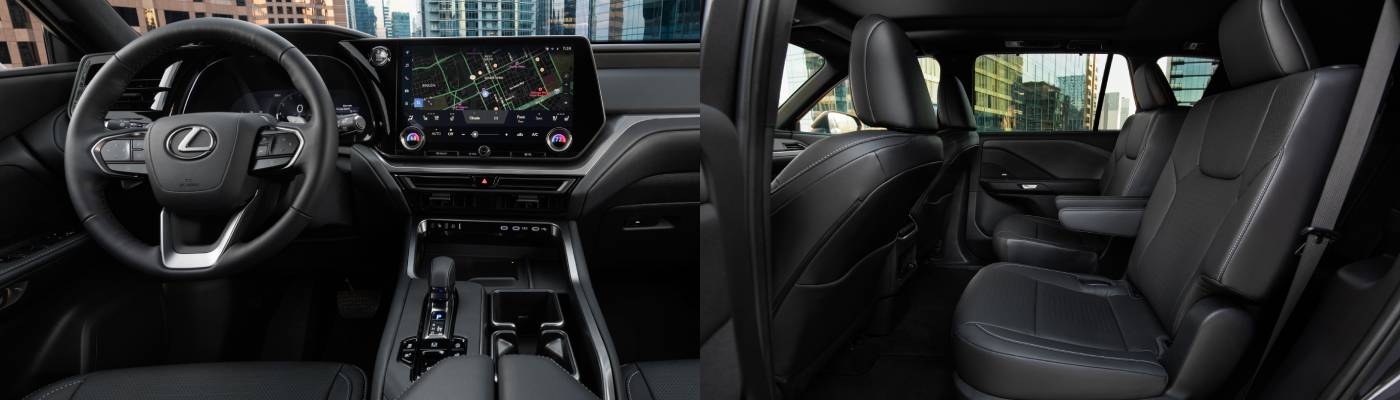
The cabin is handsome but not overtly luxurious, with Lexus' signature clean lines. Materials range from NuLuxe synthetic leather in base trims to semi-aniline leather in Luxury grades. The dashboard design is distinct from Toyota's Grand Highlander, though some reviewers note similarities in layout. Ambient lighting and premium trim elevate higher models.
Functionality
Controls are intuitive: a large 14-inch touchscreen is paired with physical knobs for climate and audio. Wireless smartphone integration and seven USB ports are standard. The interface is responsive, though some may prefer more tactile buttons or at least a volume knob for the audio system.
Technology & Safety
Lexus Safety System+ 3.0 is standard, including adaptive cruise, lane centering, blind-spot monitoring, and intersection collision mitigation. Available features include Traffic Jam Assist, Advanced Park, and a head-up display. Tech highlights include cloud-based navigation, digital key, and the Mark Levinson audio system.
Seating
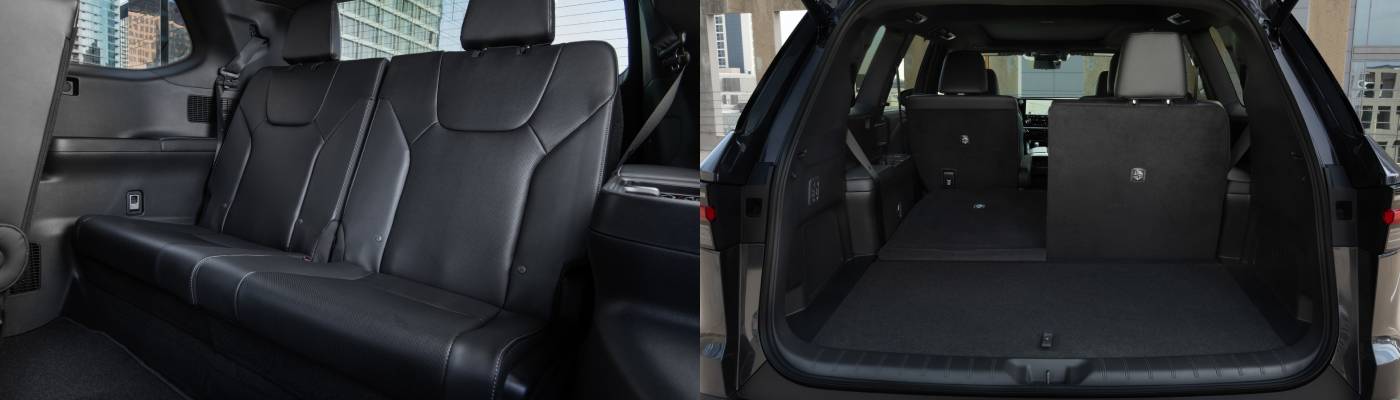
The TX seats six or seven, with captain's chairs optional in the second row. Front seats are supportive and provide good head room and adequate leg room. Second-row space is generous with very comfortable captain's chairs. The third-row seats are confining and only usable for adults on short trips. Access to the third row is eased by slide-assist mechanisms.
Cargo
Cargo space measures 20.2 cubic feet behind the third row, 57.4 cubic feet behind the second, and 97 cubic feet with all seats folded. Interior storage includes cubbies near the tailgate, modular cupholders, and multiple USB ports plus available AC outlets.
Bottom Line
There's no doubt the TX is an outstanding three-row crossover. It's reasonably nimble, provides adequate passenger and cargo space and a good range of engines. In fact, it can be especially frugal given it's hybrid options. But the luxury feels tacked on, rather than built in. The ride lacks the refinement of rivals and the engines are coarse. Plus, interior materials are just average given the price point. Lexus does have an excellent reputation for quality and reliability and a solid dealer network, which give it a leg up on some rivals.