2026 Lincoln Aviator
Aviator soars, providing comfort, power, and traditional American luxury.
The Aviator is Lincoln's midsize, three-row luxury crossover, a nameplate that originally debuted in the early 2000s before returning in its current form in 2020. For 2026, Lincoln refines the Aviator's technology suite, updates its cabin materials, and streamlines its trim structure, but the core formula remains: a rear-drive-based luxury 4-door wagon with seating for six or seven. The Aviator competes in the premium midsize segment against the Acura MDX, Audi Q7, BMW X5, Cadillac XT6, Infiniti QX60, Lexus RX L, Mercedes-Benz GLE, and Volvo XC90.
Lincoln keeps the trim lineup simple for 2026 with three models: Premiere, Reserve, and Black Label. All trims use the same powertrain: a twin-turbocharged 3.0-liter V6 producing 400 horsepower and 415 lb-ft of torque. It pairs with a 10-speed automatic transmission. Rear-wheel drive is standard on Premiere and Reserve, while all-wheel drive is optional on those trims and standard on Black Label. Towing capacity remains competitive at up to 6,700 pounds when properly equipped. Although previous Aviators offered a plug-in hybrid Grand Touring model, Lincoln has not released any 2026 PHEV specifications, and current manufacturer and dealer-level information indicates only the 3.0-liter V6 will be available for this model year.
Pricing for the 2026 Aviator starts at $56,910 for the Premiere, $66,730 for the Reserve, and climbs to the mid-$80,000s for the Black Label, depending on configuration and options. Standard features include heated and ventilated front seats, adaptive suspension, a 13.2-inch touchscreen, BlueCruise hands-free driving capability (four years included), and a full suite of driver-assistance technologies. Optional upgrades include the Dynamic Handling Package with Air Glide Suspension, a panoramic Vista Roof, premium leather upholstery, adaptive pixel LED headlamps, and the Illumination Package with an illuminated Lincoln Star. Black Label models add curated interior themes, concierge services, and exclusive materials.
Engine Performance
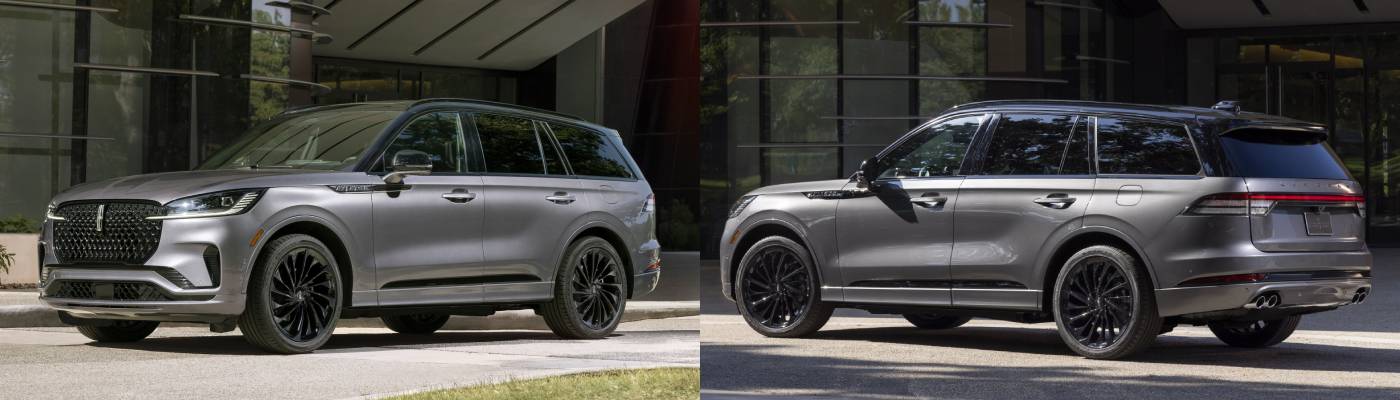
With only one engine offered for 2026, the Aviator's performance story centers on the twin-turbo 3.0-liter V6. Producing 400 horsepower and 415 lb-ft of torque, it delivers the kind of effortless acceleration expected in a luxury crossover. Acceleration is brisk for a vehicle of this size, with 0-60 mph times landing in the mid-five-second range, making it quicker than many entries in the segment. The engine's broad torque curve is generous, giving Aviator strong passing power, especially in the 40-70 mph range where the turbos spool quickly and the 10-speed automatic drops gears with minimal hesitation. The transmission itself is tuned for smoothness rather than aggression, but it responds promptly when the driver calls for more power, and its wide ratio spread helps keep the V6 in its sweet spot.
In everyday driving, the Aviator feels relaxed and confident. The engine rarely needs to rev high to maintain speed, and the cabin remains quiet even under heavy throttle. Drivers who value a refined, muscular powertrain will appreciate the Aviator's character. While some competitors offer hybrid or plug-in hybrid options that emphasize efficiency or electric-only operation, Lincoln's choice to stick with a single, powerful gas engine gives the Aviator a consistent and predictable performance profile.
Fuel Economy
EPA fuel-economy estimates for the 2026 Aviator remain unchanged from the prior model year: 18 mpg city, 25 mpg highway, and 21 mpg combined for rear-wheel-drive models, with all-wheel-drive versions posting similar numbers. The Aviator uses premium gasoline, and its 20-gallon gives it a highway driving range of roughly 450-500 miles depending on conditions. In real-world testing, owners typically report combined averages in the high teens to low twenties, which aligns with expectations for a turbocharged V6 in a three-row luxury SUV. While not class-leading, the Aviator's efficiency is competitive with similarly powerful rivals.
All-Wheel-Drive System and Drive Modes
Lincoln's available all-wheel-drive system is designed primarily for confidence in poor weather rather than rugged off-roading. It can shift torque between the front and rear axles seamlessly, improving traction on wet pavement, snow, or gravel. Drive modes include Normal, Conserve, Excite, Slippery, and Deep Conditions, each adjusting throttle response, transmission mapping, and suspension behavior. The Aviator does not offer a dedicated off-road trim, and its ground clearance and approach angles reflect its luxury-first mission. However, models equipped with the Air Glide Suspension can raise the ride height slightly for uneven surfaces, providing extra versatility for light trails or unpaved roads.
Ride Quality
Ride quality has long been a Lincoln hallmark, and the 2026 Aviator continues that tradition. The standard adaptive suspension does an admirable job smoothing out broken pavement, absorbing bumps with a soft initial impact followed by controlled rebound. The result is a ride that feels plush without becoming floaty. Higher trims equipped with the Dynamic Handling Package and Air Glide Suspension elevate the experience further, allowing the Aviator to glide over imperfections with an almost limousine-like demeanor. The air suspension can also lower the vehicle for easier entry and exit, a thoughtful touch for families or older passengers.
Differences between trims are noticeable. The Premiere rides comfortably but can feel slightly busier over sharp impacts due to its simpler damper setup. The Reserve improves composure with adaptive dampers, while the Black Label, and it's available Dynamic Handling Package, delivers the most refined ride in the lineup. Regardless of trim, the Aviator prioritizes comfort over sportiness, which aligns with Lincoln's brand identity.
Handling Characteristics
Despite its comfort-oriented tuning, the Aviator handles with more precision than its size suggests. Steering firm and accurate, making the large crossover easy to maneuver in tight spaces while still being confidence-inspiring on the highway. Body roll is present in corners, but it is well-controlled, especially on models equipped with the adaptive suspension. The Aviator never pretends to be a sport crossover, yet it maintains composure during quick lane changes or sweeping turns that would have other luxury competitors falling all over themselves.
Braking performance is solid, with a firm pedal feel and predictable stopping distances. The brake tuning avoids the grabby sensation found in some competitors, contributing to the Aviator's smooth driving character. Overall, the handling strikes a balance between stability and comfort, making the Aviator a pleasant long-distance cruiser.
Interior Noise Levels
Lincoln places a premium on quietness, and the Aviator's cabin is impressively hushed. Acoustic-laminated glass, extensive sound-deadening materials, and active noise control work together to keep wind and road noise at bay. Even at highway speeds, conversations between first- and third-row passengers remain easy. Compared to direct competitors, the Aviator ranks among the quietest in the segment, rivaling the Lexus RX L and Mercedes-Benz GLE for serenity. The twin-turbo V6 is nearly silent during steady cruising and only becomes audible under heavy acceleration, where it produces a refined growl rather than a harsh roar.
Interior Design, Materials, and Features
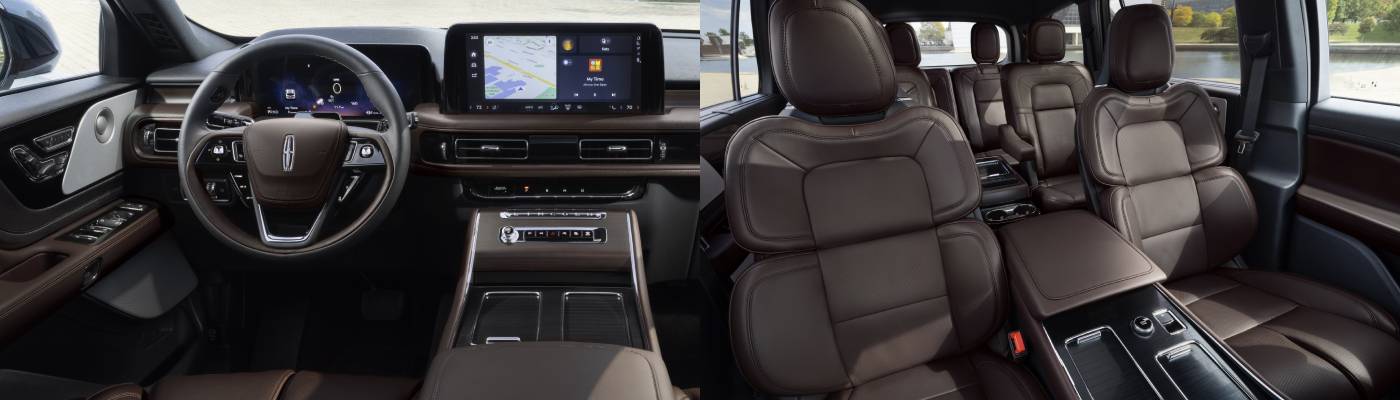
The Aviator's interior design emphasizes horizontal lines, soft curves, and a sense of spaciousness. Materials vary by trim, but even the base Premiere uses high-quality synthetic leather, soft-touch plastics, and tasteful metallic accents. The Reserve adds genuine leather, ambient lighting, and upgraded trim pieces, while the Black Label introduces curated themes with premium leathers, suedes, and wood or aluminum inlays. The overall aesthetic leans toward modern American luxury, providing a warm, inviting, and subtly upscale ambiance.
Feature content is generous across the lineup. The 13.2-inch touchscreen sits prominently atop the dash, paired with a digital gauge cluster and optional head-up display. Climate controls remain partially physical, which helps usability, and Lincoln's seats are among the most comfortable in the segment, offering heating, ventilation, and available massage functions. The panoramic Vista Roof enhances the sense of openness, especially for second-row passengers.
Interior Functionality
Functionality is one of the Aviator's strengths. The control layout is intuitive, with clearly labeled buttons and a logical menu structure in the infotainment system. The push-button gear selector frees up space on the center console, and storage cubbies are plentiful. Wireless Apple CarPlay and Android Auto are standard, as is Lincoln's Phone-As-A-Key system, which allows owners to unlock and start the vehicle using their smartphone.
The second row offers either a bench or captain's chairs, and both configurations provide ample legroom and easy adjustability. The third row is best suited for children or shorter adults, but access is straightforward thanks to a tilt-and-slide mechanism on the second-row seats. Overall, the Aviator's interior is designed with family use in mind, balancing luxury with practicality.
Technology & Safety Features
Technology is a major selling point for the 2026 Aviator. Standard features include a large touchscreen with Google-powered navigation, a digital instrument cluster, wireless smartphone integration, and a 10-speaker audio system. Higher trims add a 14-speaker Revel system, head-up display, and additional ambient lighting. BlueCruise hands-free driving capability comes standard with four years of included service, allowing for hands-free operation on compatible highways.
Safety features are comprehensive across all trims. Standard driver-assistance technologies include forward collision mitigation, blind-spot monitoring, rear cross-traffic alert, lane-keeping assistance, evasive steering assist, rear automatic braking, parking sensors, and a surround-view camera system. These features contribute to the Aviator's strong safety profile and ease of use in daily driving.
Seating Area
The Aviator's seating flexibility is one of its key advantages. Buyers can choose between a seven-passenger layout with a second-row bench or a six-passenger configuration with captain's chairs. The front seats are exceptionally supportive, offering a wide range of adjustments and available massage functions. The second row provides adequate legroom and headroom, and the captain's chairs create a more premium feel while improving access to the third row.
The third row, while not as spacious as that of a full-size SUV or crossover, is adequate for children or occasional adult use. Entry and exit are simplified by the second row's tilt-and-slide feature, and the wide rear doors help passengers climb in and out with minimal effort. Overall comfort is excellent for the first two rows and acceptable for the third, consistent with the segment.
Cargo Capacity
Cargo space in the Aviator is competitive for a midsize luxury SUV. With all seats in place, it offers roughly 18 cubic feet behind the third row. Folding the third row expands capacity to around 41 cubic feet, and with both the second and third rows folded, the Aviator provides up to 75.9 cubic feet of total cargo volume. The load floor is flat, and the power-folding third row makes reconfiguring the space easy. Interior storage includes large door pockets, a deep center console bin, and multiple cupholders.
USB ports are plentiful, with both USB-A and USB-C options available in all three rows. Higher trims also offer a household-style 110-volt AC outlet, making it easy to power laptops or small appliances during road trips.
Bottom Line
The 2026 Lincoln Aviator stands out as a refined, comfortable, and technologically advanced luxury SUV that prioritizes serenity and smoothness over outright sportiness. Its powerful twin-turbo V6 delivers strong acceleration, while the adaptive suspension and available air suspension create a ride quality that rivals more expensive European competitors. The cabin is quiet, spacious, and beautifully finished, especially in Black Label trims, and the Aviator's technology suite gives it a modern edge. Its strengths include comfort, power, interior design, and a generous list of standard features.
However, the Aviator is not without weaknesses. The interior isn't as spacious as some of the competition. Fuel economy lags behind hybrid-equipped rivals, and the absence of a plug-in hybrid option for 2026 may disappoint buyers seeking electrification. The third row is usable but not expansive, and pricing climbs quickly with options. Still, the Aviator remains a compelling choice for buyers who value comfort and luxury over aggressive handling. The Reserve trim offers the best balance of features and value, providing premium materials, advanced technology, and optional packages without reaching the Black Label's higher price point.