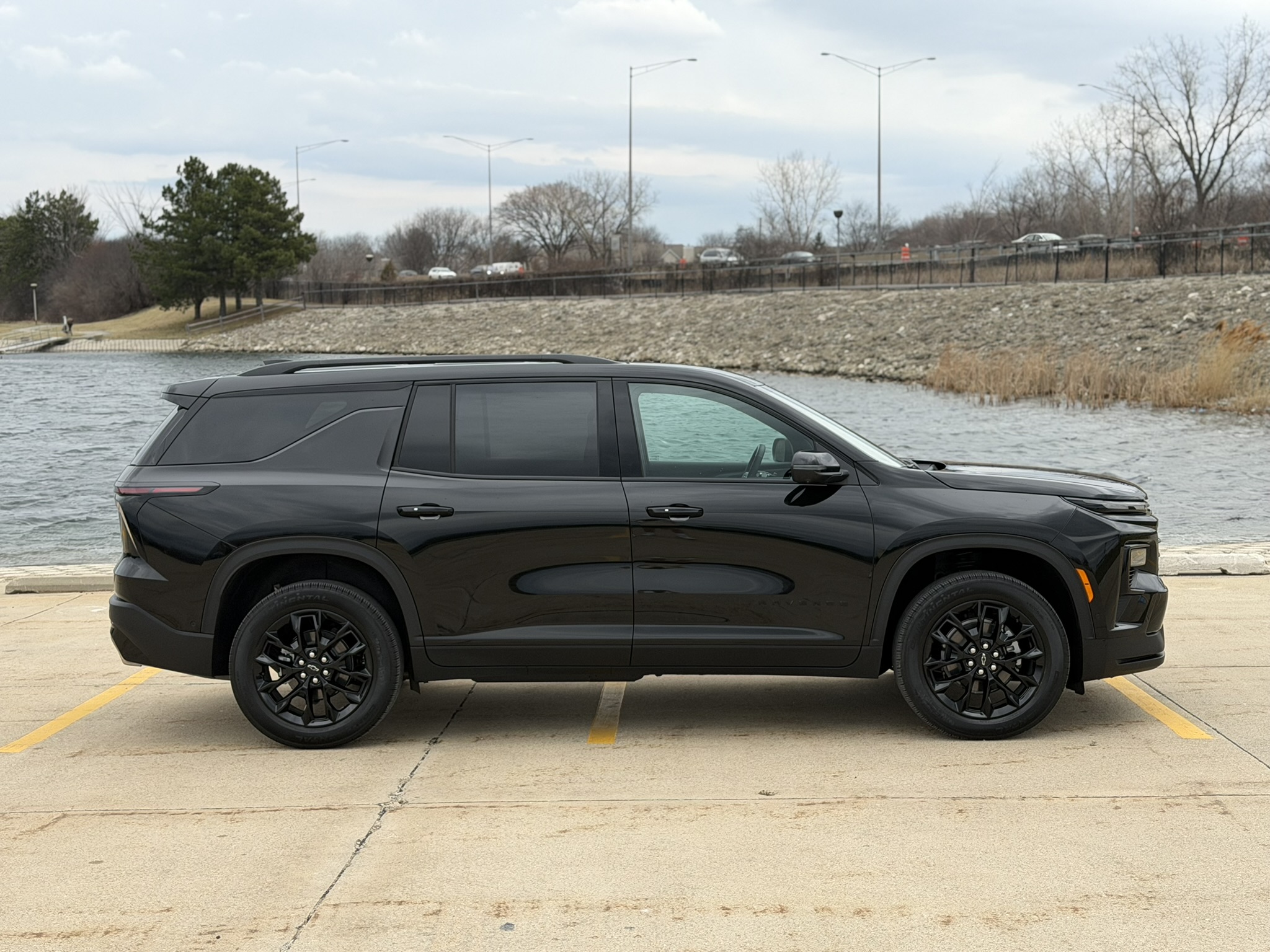
2026 Chevrolet Traverse
A lot of room and practicality, but lacking in pizazz.
Test Vehicle: 2026 Chevrolet Traverse LT AWD
Powertrain: 2.5L Turbo 4-cylinder DOHC
Exterior Color: Mosaic Black Metallic
Interior Color: Jet Black Evotex Seats
Options: Enhanced Driving Package ($3,935), Midnight / Sport Edition ($2,285), Driver Confidence Package ($1,225), Jet Black Evotex Seats ($1,000)
MSRP as tested: $53,240 (With Delivery/Destination)
Pros: Interior Space, SuperCruise, Third Row, Standard Safety
Cons: Interior Materials, Lack of Power, Engine Refinement
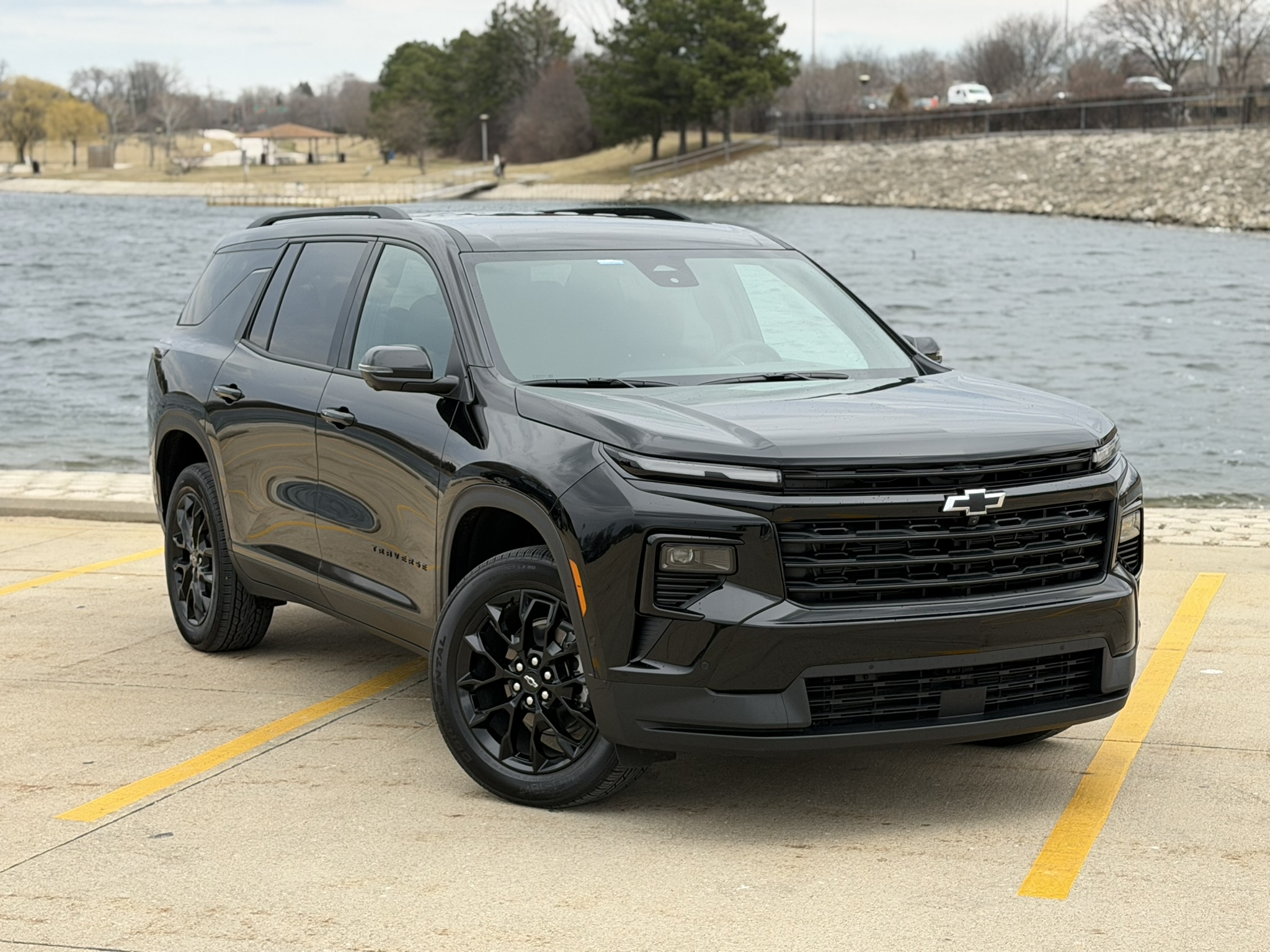
The Chevrolet Traverse is a midsize three-row SUV that prioritizes space, practicality, and modern tech over outright luxury or sporty performance. It accommodates seven or eight passengers with one of the larger interiors of the midsize class. It has been on the market since the 2009 model year and is currently in its third generation, which debuted in 2024. The Traverse is available with front or all-wheel drive and is available in four trims known as LT, Z71, High Country, and RS.
Every model comes with an eight-speed automatic transmission and a 2.5L turbocharged four-cylinder engine that makes 328 horsepower and 326 pound-feet of torque. Front-wheel drive is standard on LT, High Country and RS trims, and all-wheel drive is available for an extra $2,000. Z71 models come standard with all-wheel drive. Prices start at $42,795 for a FWD LT model and climb to over $60k for an optioned out RS or High Country AWD model. Key competitors include the Ford Explorer, Honda Pilot, Hyundai Palisade, Kia Telluride, Mazda CX-90, Toyota Grand Highlander, and Volkswagen Atlas. I spent a week in an AWD Traverse LT with some key options that checked in at $53,240 and here’s what stood out…
Exterior:
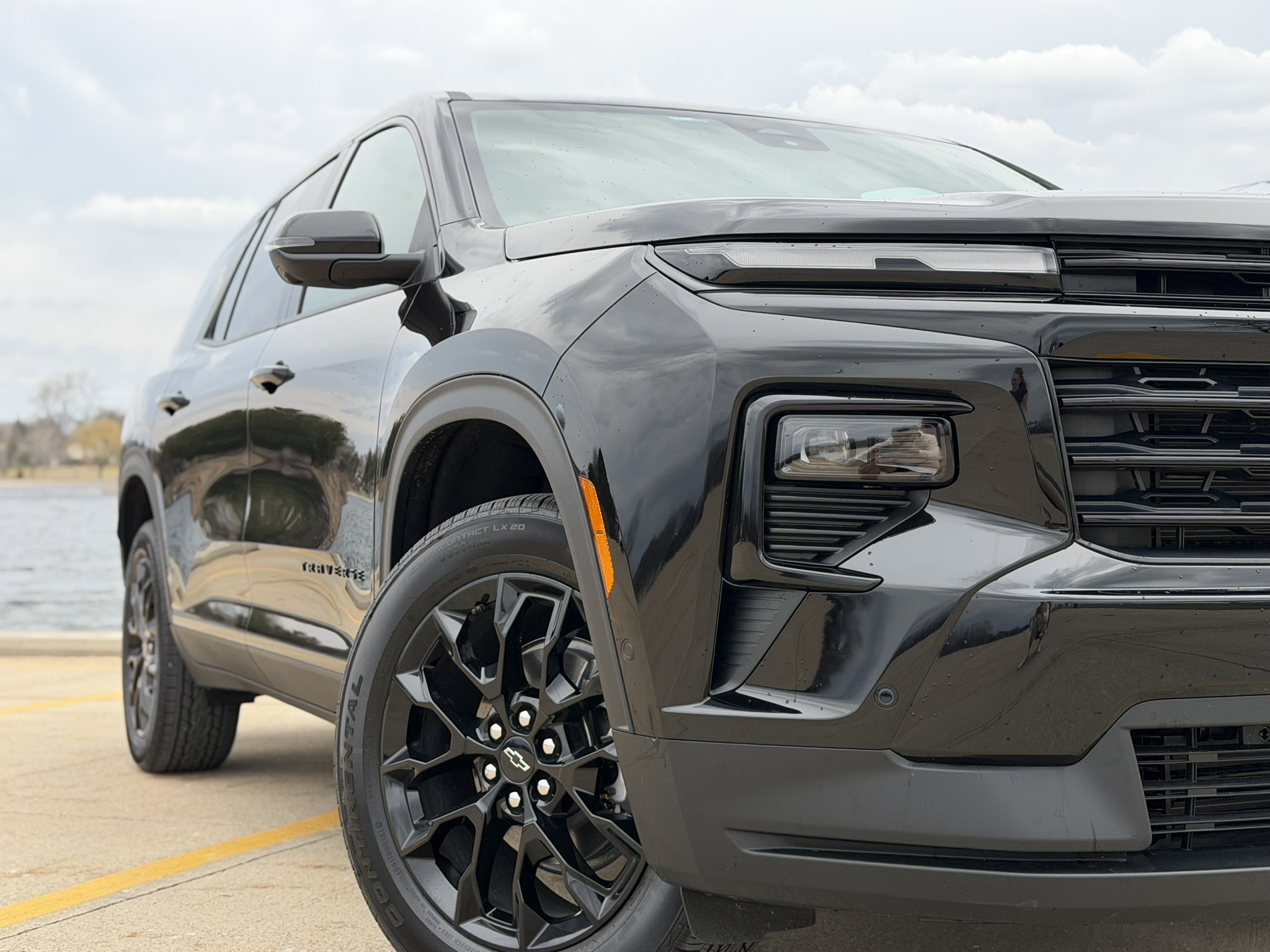
The latest version of the Traverse adopts the bolder, truck-inspired look that leans heavily on Chevrolet’s larger SUVs like the Tahoe and Suburban, and that’s a good thing for the Traverse. Past models were more generic, while this generation features a wide grille, squared-off proportions, and a more rugged stance than previous generations. It looks more like a smaller Tahoe SUV and less like a minivan or beefed-up station wagon. Trim-specific designs (like the off-road Z71 or upscale High Country) add even more visual variety and character amongst the lineup. The front fascia/grille varies with trim, RS gets blacked-out sporty elements, Z71 adds rugged details like a more aggressive lower fascia, while High Country introduces chrome accents for a premium feel.
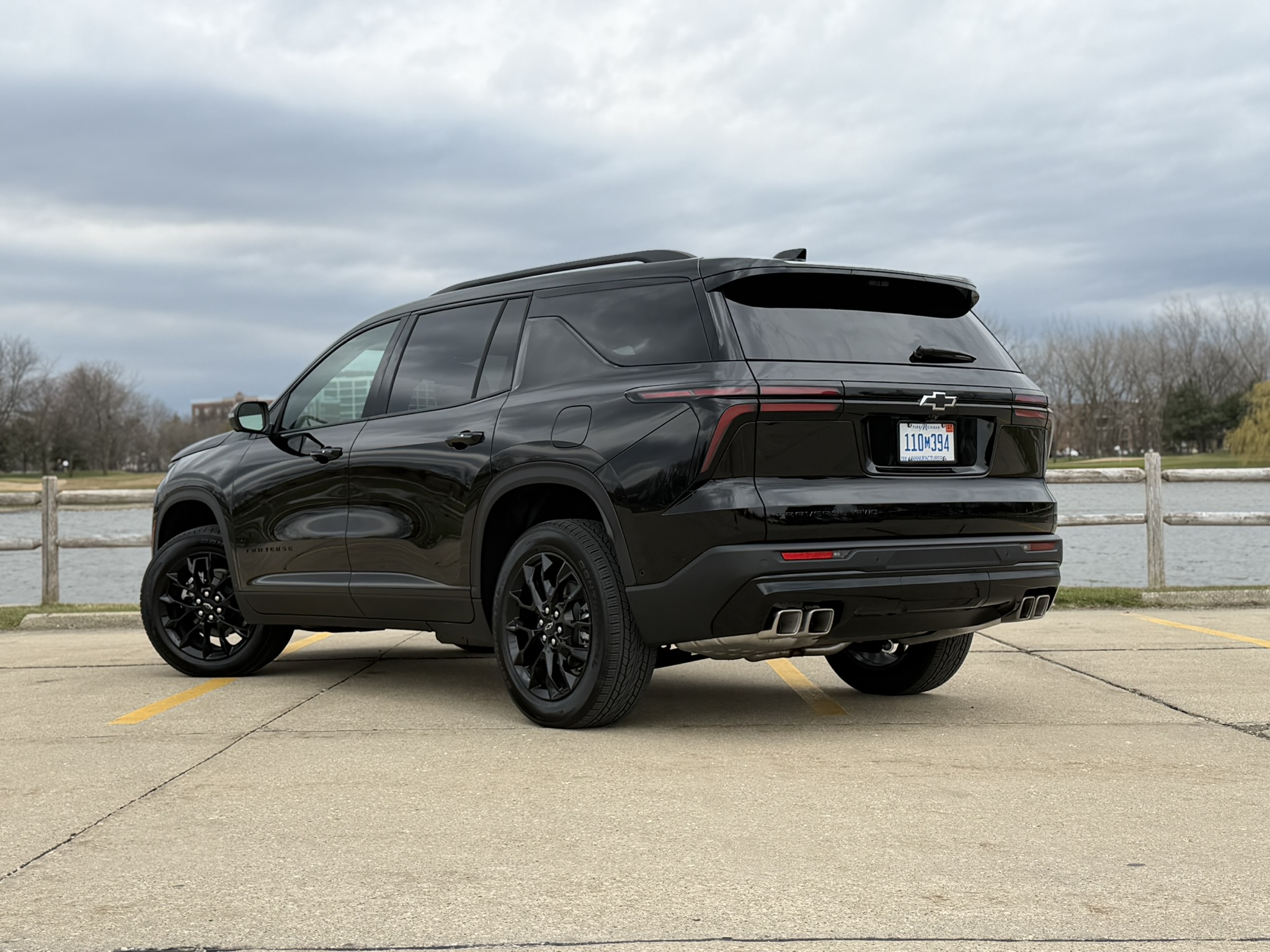
From the side, the Traverse emphasizes size, practicality, and a more SUV-like silhouette than before. It has long, straight body lines with a relatively flat roofline which helps maximizes interior space. There are squared wheel arches that are subtle but reinforce the tougher, more rugged identity. Wheel sizes range from 18” in the Z71 with all-terrain tires up to 22” wheels on the High Country. Around back it is again more squared off with wide, horizontal LED taillights that are simple in their design. Dual exhaust outlets with a quad-style appearance give it a slightly sportier look, especially on higher trims. Overall impression is that it is clean and functional, but not especially memorable compared to competitors.
Performance:
The Traverse uses a turbocharged 2.5-liter four-cylinder engine making 328 horsepower and 326 lb-ft of torque, paired with an eight-speed automatic transmission that routes power to the front wheels. Optional is an upgrade to all-wheel drive for $2,000 across most of the lineup (including my test model). which is competitive for the class and sufficient for most small trailers, boats, and campers.
It’s a fairly heavy SUV at 4,700 - 4,900 pounds and that was somewhat noticeable in the power. When hitting the accelerator, it seemed to lag a bit and work harder than it needed to. It will get from 0-60 MPH in about 7.3 seconds which is average, but not impressive. On paper, there should be plenty of power for the Traverse, but the execution seems to be the issue with power lag, coarse engine sounds, and it generally doesn’t feel as refined as some competitors. In everyday driving, it’s fine, but push it hard from a stop or merge on highways and you’ll notice that lack of refinement.
Ride Quality:
Despite some of the power concerns, the Traverse is actually quite comfortable on the highway for longer trips. We took the Traverse on a family trip to visit some colleges for my daughter, and it proved a worthy vehicle for such a trip. On the highway it was very smooth and stable, absorbing the many road imperfections well. It felt composed and very grounded for the drive. It’s definitely tuned for a more comfortable drive as handling is predictable and does what it should, but not overly engaging. Steering is soft and body roll is controlled and kept to a minimum. It rides just like what it is, a large, family-focused SUV that is easy to drive, but not necessarily fun to drive.
Fuel Economy:
When it arrived with a full 19.4-gallon tank, it offered a driving range of around 500 miles which is plenty for many family road trips. EPA estimates 20 / 27 / 23 / MPG city / highway / combined for FWD models and 19 / 24 / 21 MPG city / highway / combined for AWD models. After a week with a lot of highway driving, I logged about 23 MPG on my AWD test model. It does run on regular grade 87-octane fuel making it one of the easier ones on the wallet at the pump.
Super Cruise:
My test model was upgraded with one of GM’s best features for a road trip, Super Cruise. Super Cruise is a semi-autonomous hands-free driving feature that was part of the $3,935 Enhanced Driving Package for the Traverse. I have driven similar systems in other models but have to say that Super Cruise takes the lead on this technology. The system is easy to engage with and operates incredibly smoothly. Once cruise control is on, the Super Cruise light will illuminate on the digital cluster if available. It will currently engage on over 400,000 miles of compatible roads throughout the US and Canada including both divided and undivided highways. When it is safe to do so, press the Super Cruise button on the steering wheel to engage Super Cruise. When the symbol and steering-wheel light bar illuminate in green, you may remove your hands from the steering wheel. Do not remove your hands from the steering wheel unless the light bar is green, which indicates that Super Cruise is steering the vehicle. To disengage Super Cruise, press the Super Cruise button again or press the brake pedal.
Once engaged, it maintains its placement on the center of lane thanks to multiple real-time cameras, sensors, GPS, and LiDAR precision map data. The distance behind the vehicle in front is set by the driver and maintained automatically. Super Cruise also features automatic lane changing or lane change on demand. If you approach a car that is driving slower than your set speed, the Traverse automatically changes lanes to pass the vehicle ahead of you. Before changing lanes, it will notify the driver via the digital cluster and seat vibrations. It will also change lanes automatically if it senses a vehicle behind you following closely to get out of the way for that driver. It works seamlessly and appropriately, never "cutting off" other drivers. The lane change system can also be engaged on demand when the driver turns a turn signal on.
A small camera ensures driver’s attentiveness and focusses on the road ahead. If the SUV senses the driver is not focused, the steering wheel light-bar flashes for the first alert, turns red on the second alert, the seat vibrates, and it will direct the driver to take over control. If the driver does not take over, the Traverse will slow down and safely come to a stop. Super Cruise was beyond impressive as I was able to let the Traverse do a lot of the highway driving on our family trip visiting colleges. Kudos to GM for developing such an intelligent system that is easy to operate.
Interior:
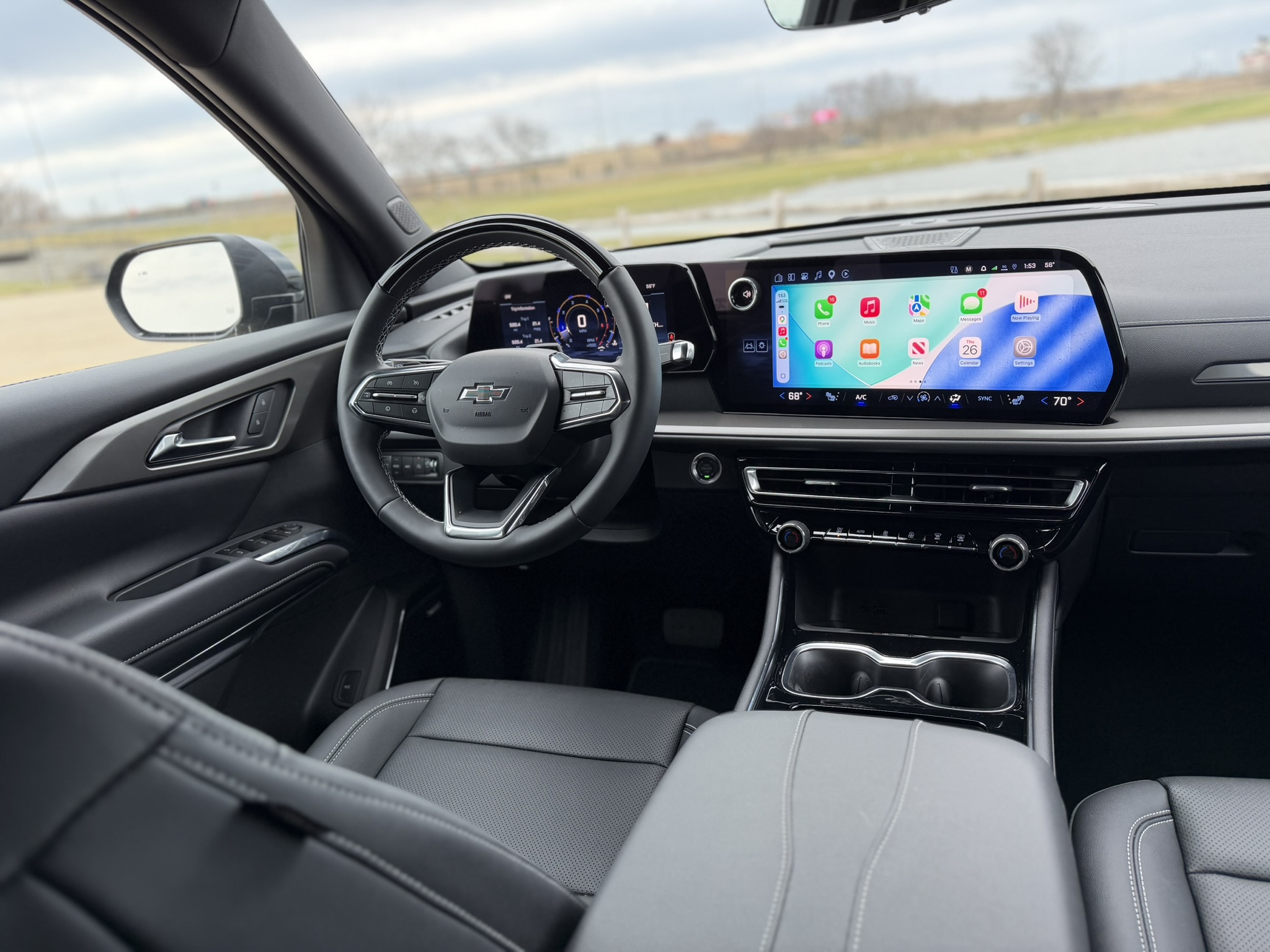
Hoping inside is where the magic is for the Traverse as it is one of the most spacious three-row SUVs in the midsize class. The space is modern, functional, and tech-focused. There is a clean, horizontal dashboard with an emphasis on a huge 17.7” infotainment touchscreen that dominates the cabin. It also has an 11” fully digital gauge cluster with customizable settings. Materials are a mixed bag and in particular were filled more with hard plastics on my LT test model than I would have preferred. There were some soft touch areas, but overall, it felt more utility focused and subpar compared to vehicles like the Hyundai Palisade and Kia Telluride from a material quality standpoint.
From a space standpoint, the Traverse feels opulent with a very airy, open cabin with big windows all around. It’s practical with its storage solutions, placement of USB drives and family-friendly layout. Storage is abundant, with oversized bins throughout the cabin, including a large compartment in the center console where the wireless charging deck is located. Two big cupholders sit right in front of a deep compartment with a retractable door, and a large open storage space beneath the console is accessible from both sides. Six USB ports keep all three rows connected. Everything functions easily with room to spread out and be comfortable on those road trips.
Seating:
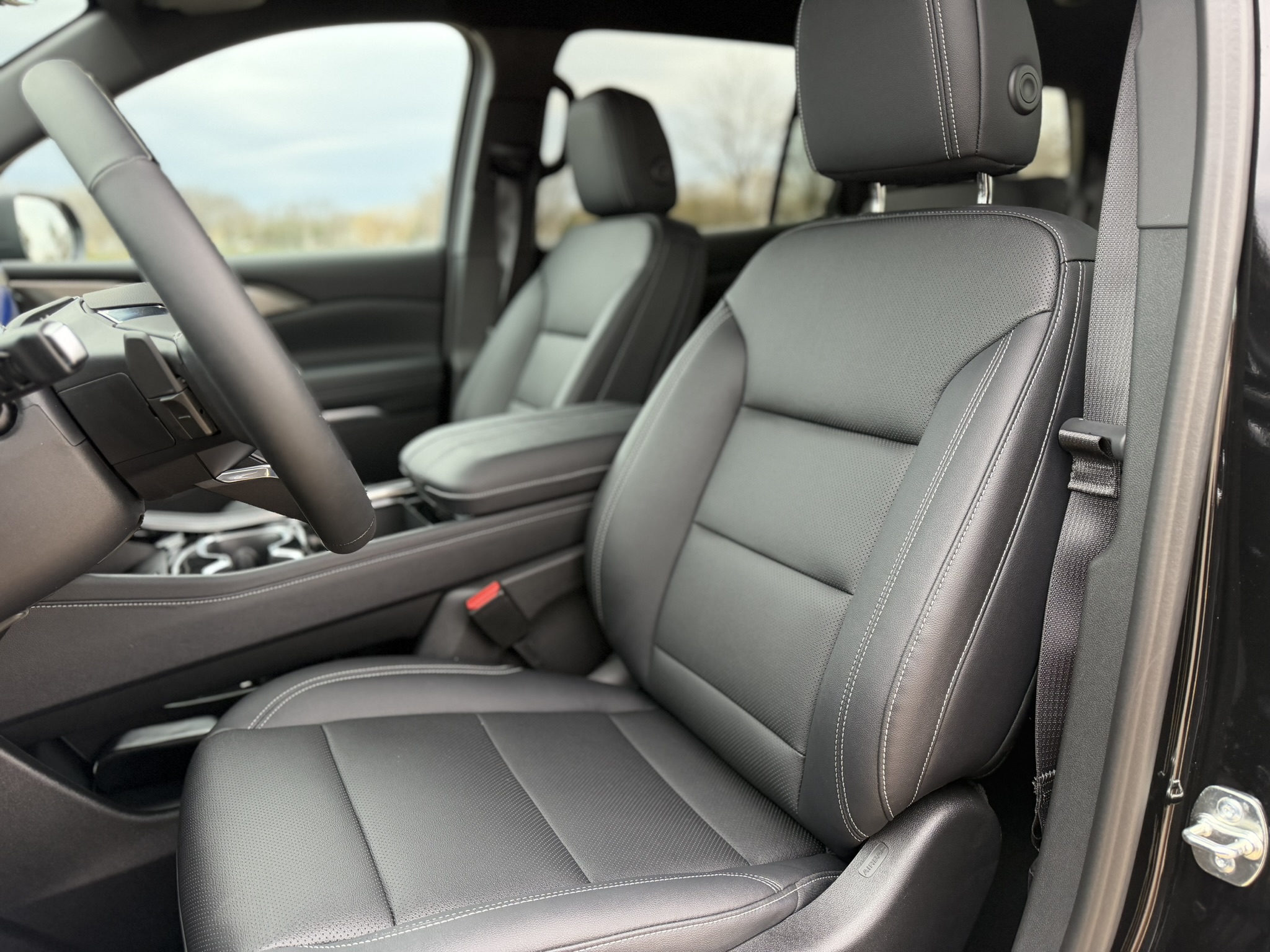
If you’re judging purely on roominess, the Traverse is near the top of the midsize SUV segment. There is seating for 7–8 passengers depending on configuration and with an adult-friendly third row, which is rare in this class. Base models come standard with cloth upholstery while synthetic leather and genuine leather are both available on higher trims. The seats are supportive and roomy with plenty of head and legroom up front. It was easy to find a good driving position and adjust the two front seats for good visibility regardless of your size. There are available upgrades like power adjustments, heating, and ventilation on higher trims. For our longer road trip, we found the seats to be very comfortable.
Second row seats lean into flexibility and space with the option of either a bench seat or captain’s chairs. There is really good leg, head, and shoulder room. Our model had the captain’s chairs and access to the third row was easy - either between the seats or by folding the seat forward. The third row is among the best in the class with legitimate room for an adult. There is decent head and leg room in the third row, and it has a split-folding design for flexibility. Cushioning is firmer and less supportive than the front rows, but that is to be expected. It’s still best suited for kids, but an adult can fit if needed. Overall, the Traverse provides family-friendly seating options with good use of space all around for adults, kids, car seats, and anything else a family might travel with.
Technology:
Drivers will face an 11” digital instrument cluster while a 17.7” touchscreen sits at the center of the dash as one of the largest screens in the class. Chevy uses a Google-based operating system with built-in apps, navigation, and voice assistant. The system is fast and responsive with a clean layout that is relatively easy to learn. The system feels more like a smartphone than a traditional automotive interface. Wireless Apple CarPlay & Android Auto standard along with wireless phone charging and multiple USB ports across all rows and an available 120V household outlet which came in handy for charging the necessary Nintendo Switch for the family trip.
Standard is a 6-speaker audio system, but there is an available Bose 12-speaker premium system with subwoofer. The upgrade makes a noticeable difference, especially in a large cabin like this. There is an available 360-degree camera system with HD rear vision camera standard, parking sensors and rear pedestrian alert which I highly recommend. The cameras work well and are very helpful when maneuvering the Traverse around, especially when its filled with people and things.
The Traverse also includes a lot of everyday usable tech such as AutoSense hands-free power liftgate, remote start and app connectivity (via OnStar ecosystem), digital controls for climate and vehicle settings, and one-touch folding seats on higher trims. These aren’t flashy, but they make daily life easier. Overall, the tech worked very well, although there were a couple times the Apple CarPlay froze on me and needed a restart. While feature-rich, it doesn’t feel quite as seamless or refined as the best systems from some competitors. However, the 2026 Traverse offers a lot of technology for the money, and in terms of features, it’s one of the more advanced midsize SUVs.
Cargo:
The 2026 Chevrolet Traverse offers some of the largest cargo space in the midsize SUV class with 22.9 cubic feet behind the third row. When you fold the third-row seats down that space expands to 56.6 cubic feet of space behind the second row. And with both rows of seats folded flat, there is an expansive 97.6 cubic feet of space. That maximum figure puts it at or near the top of the segment, beating many rivals like the Honda Pilot and Kia Telluride. Beyond raw numbers, the Traverse does a good job with usability with features such as flat load floor when seats are folded, an available power-folding third row, underfloor storage compartment for hidden items, and multiple storage bins and cubbies throughout the cabin.
Safety / Driver Assistance:
Every 2026 Chevrolet Traverse comes with Chevy Safety Assist plus a broader set of baseline features with over 20 standard systems total. The Core “Chevy Safety Assist” suite includes:
- Automatic Emergency Braking
- Forward Collision Alert
- Lane Keep Assist with Lane Departure Warning
- Following Distance Indicator
- Front Pedestrian & Bicycle Braking
- IntelliBeam automatic high beams
Beyond that core bundle, Chevrolet adds a surprisingly deep list of standard tech:
- Blind-spot monitoring (Lane Change Alert with Side Blind Zone Alert)
- Rear Cross Traffic Braking
- Reverse Automatic Braking
- Rear Park Assist
- HD rearview camera
- Seat belt reminders (all rows)
- Teen Driver system (monitoring & limits for new drivers)
- Buckle-to-Drive (prevents shifting unless belts are fastened)
Higher trims (or packages) unlock more advanced systems—this is where the Traverse starts to feel genuinely high-tech. These go beyond basics, addressing more complex real-world hazards like intersections and cyclists. Features such as adaptive cruise control which maintains distance automatically or intersection automatic emergency braking handles cross-traffic scenarios while there are alerts for both rear pedestrians and side bicyclists.
The 2026 Traverse delivers one of the most comprehensive standard safety packages in its class, then adds cutting-edge options like hands-free driving on top. In simple terms, the base model is very well protected while the higher trims are genuinely high-tech. If safety tech is a priority, the Traverse is a strong choice, especially if you step up to trims that include Super Cruise and the advanced driver-assist features.
Final Statement:
The Chevrolet Traverse has grown up significantly and is now more like a baby Tahoe than ever before. Its best feature is the amount of space it offers inside for its passengers and cargo as it’s one of the roomies in the class and most versatile, making it an excellent choice for families. Under the hood, it uses a turbocharged 4-cylinder engine with strong power on paper but lacks some refinement. Inside you’ll find huge touchscreens with modern tech and a clean layout with some impressive features such as Super Cruise that is class leading. On the flip side, some materials are basic and blander compared to others in the class. Overall, it’s a solid choice in the class and definitely one to check out if you’re in the market for a three-row SUV and in need of space and that usable third row.