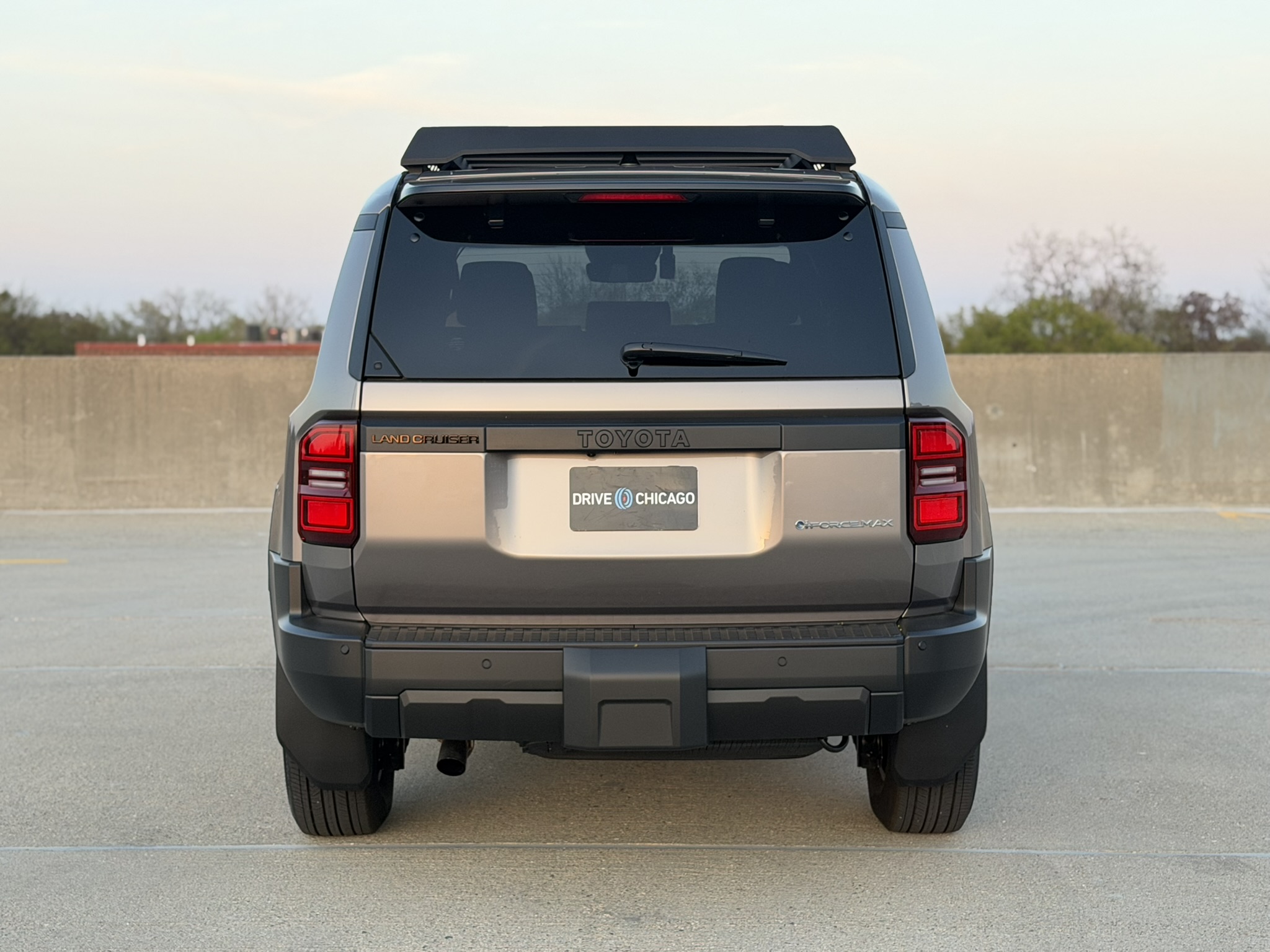
2026 Toyota Land Cruiser
Back to basics with a retro design and ready to hit the trails.
Test Vehicle: 2026 Toyota Land Cruiser 1958
Exterior Color: Meteor Shower
Interior Color: Black Cloth
Powertrain: i-FORCE MAX 2.4L 4 Cylinder Turbo
Options: Rear Bumper Guard ($230), Liftgate Light ($195), Illuminated Door Sills ($199), Rock Rails ($990), Front Skid Plate ($440), Dashcam ($360), Roof Rack ($1,440), Performance Cat Back Exhaust ($1,395), Connected Services ($485), Cargo Cover ($210) All Weather Lines ($248), All Weather Floor mats ($140).
MSRP as tested: $65,238 (With Delivery/Destination)
Pros: Off-Road Capability, spacious interior, retro styling, simplicity, ready to be upfitted
Cons: High load floor in cargo area, Hybrid- but still average fuel economy
The Toyota Land Cruiser returned to its rugged origin when it arrived back in the lineup for 2024. Since its introduction in the U.S. market in 1958, the Land Cruiser evolved with many variations. Land Cruiser stays true to its heritage with the current model as a high-quality off-roader that’s a bit smaller at a more accessible price point that will take a wider range of customers on numerous back country adventures. Toyota’s reimagining of this iconic nameplate strikes a balance between rugged adventure readiness and everyday utility, making it a compelling option in the midsize SUV segment.
It offers seating for up to five passengers and comes standard with a 2.4-liter turbocharged four-cylinder hybrid engine generating 326 horsepower and 465 lb-ft of torque. It delivers significantly better fuel economy than its predecessor, achieving an EPA-estimated 22/25/23 mpg (city/highway/combined). All models are a body-on-frame design and pair with an 8-speed automatic transmission and a full-time four-wheel-drive system. It’s also capable of towing up to 6,000 lbs.
It carries over into 2026 in two grades that include 1958 and the Land Cruiser grade. Prices for 2026 start at $57,600 for the 1958 grade and $63,675 for the Land Cruiser Grade. Competition includes other off-road ready SUVs such as the Ford Bronco, Jeep Wrangler, and Toyota’s own 4Runner. I spent a week in a 2026 Land Cruiser 1958 that checked in at $65,238 with some options and here's what stood out...
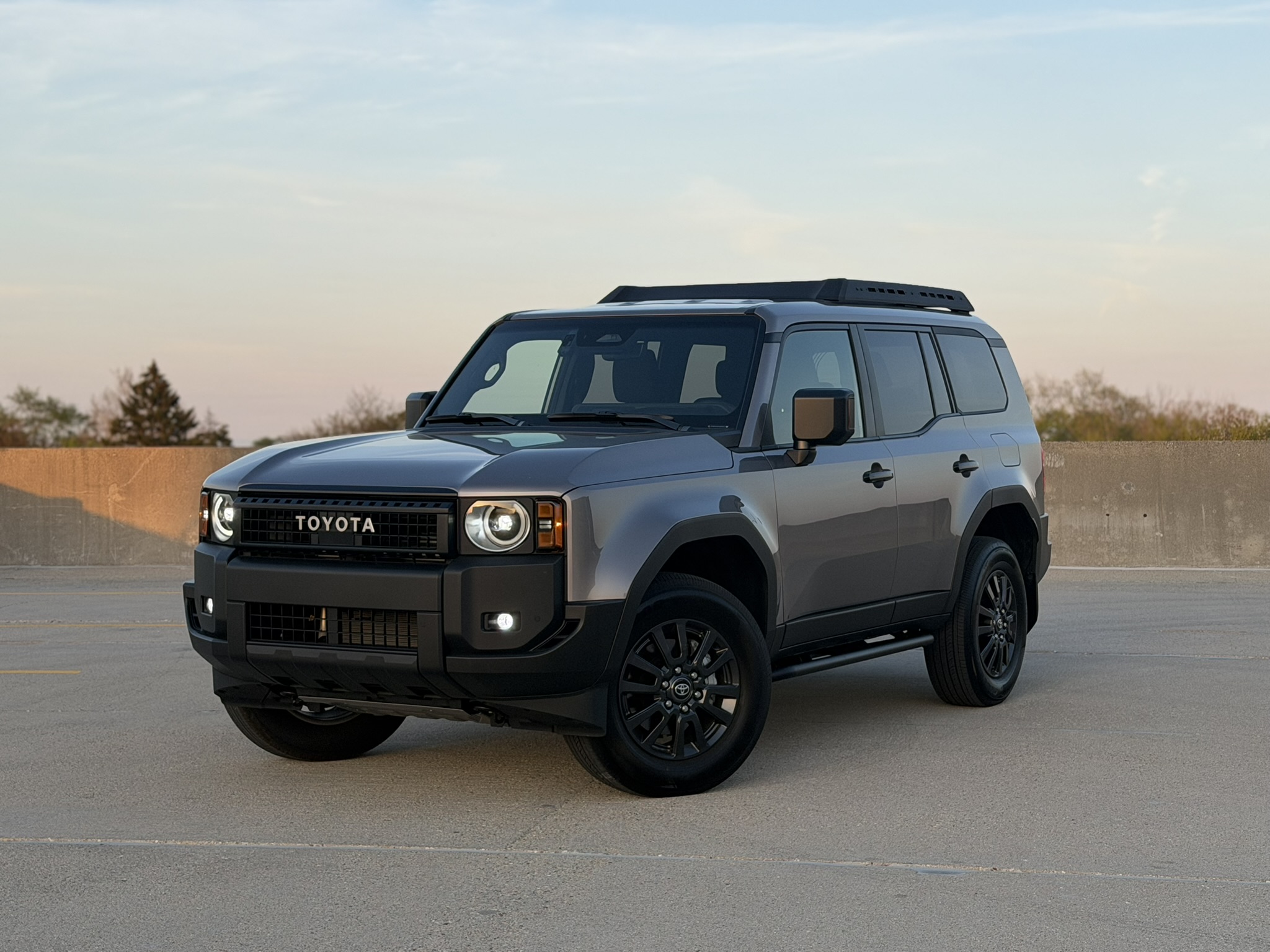
1958 Exterior:
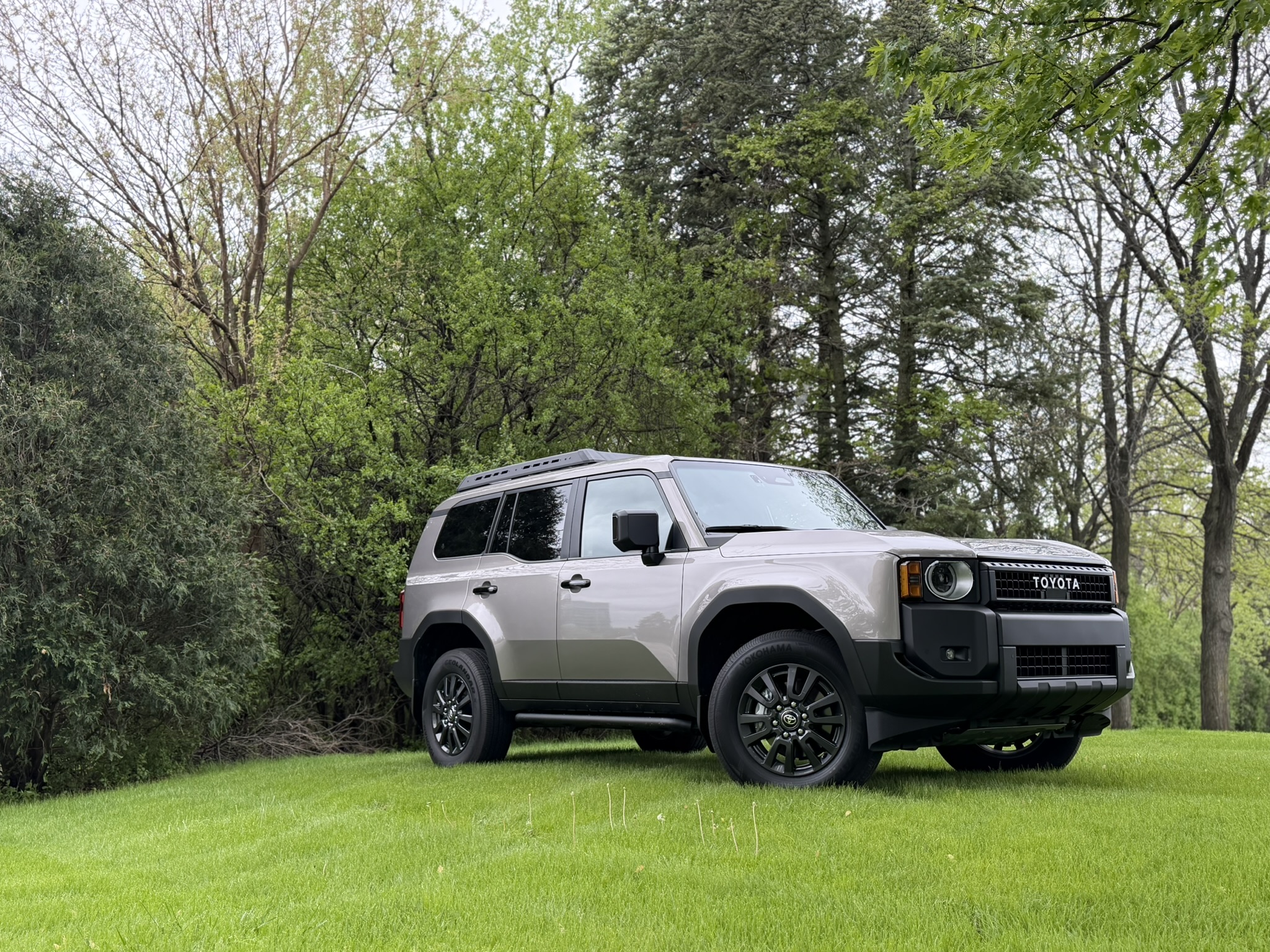
The “1958” badge references the year the Land Cruiser first arrived in the U.S., and this trim leans heavily into that heritage with round headlights, cloth seats, and a stripped-down cabin. 1958 models are available in three colors (Black, Meteor Shower, and Ice Cap) while the 2026 Land Cruiser overall will be offered in seven exterior color choices. 1958 models get 18” gray alloys wrapped in all-season tires while Land Cruiser models come with 20” alloys. The Land Cruiser embraces a retro-modern aesthetic that pays homage to its past while incorporating contemporary elements. Its boxy silhouette, bold grille, and squared-off wheel arches evoke a sense of ruggedness, with variations on the front headlights. The 1958 fully embraces the history with round LED headlights and a Toyota heritage grille. The design is functional, with short overhangs and a high ground clearance that cater to off-road enthusiasts and fully ready to be upfitted. The 1958 model is perfect for those that want to add their own wheels/tire setups, lift kits, custom sliders, and more. It’s set up to be as base as possible without putting items/features on it that all buyers won’t need. The Land Cruiser grade is more suitable for someone who has no intentions of customizing one.
The design is fresh from every angle with a more aggressive off-road style. The profile is boxy all-around. Land Cruiser grades get a different front end setup with slim, rectangular modern LED headlights reminiscent of the 60 series. A squared body profile resembles past Land Cruisers, and the A pillar is pushed back while the belt line was lowered, not only to complement the look, but for better outward visibility on the trails. Around back is a simple look with squared tail lights and a standard power liftgate with a pop-out window. Personally, I hope Toyota looks to expand the lineup and offer TRD grades with more aggressive wheels and tires to match the rest of this SUVs capability.
Powertrain
Toyota equips the Land Cruiser with a 2.4-liter turbocharged four-cylinder hybrid powertrain that produces a solid 326 horsepower and 465 lb-ft of torque. While not as powerful as the V6 Lexus GX that it shares a platform with, the Land Cruiser will get from 0-60 MPH in around 7.7 seconds. Both models pair with an 8-speed automatic transmission and a full-time four-wheel-drive system making it very capable on diverse terrains.
Despite its rugged nature, the Land Cruiser delivers a smooth and composed ride on highways and city roads. The suspension system absorbs most bumps and road imperfections, offering a cushioned experience. Given its size and body-on-frame construction, the handling leans more toward stability than agility. It feels solid but isn't as nimble as some unibody SUVs. It’s easy to maneuver thanks to its more manageable size and steering it direct and well-balanced. High-quality materials and sound insulation in the cabin help reduce noise, vibration, and harshness, ensuring a quiet and comfortable driving environment.
It has plenty of juice for passing on the highway and does so with class. As a body-on-frame SUV, its ride is very truck-like providing a rougher ride than many crossovers’ people may be used to. As someone who owns a Toyota 4Runner, I really enjoyed its trucklike ride
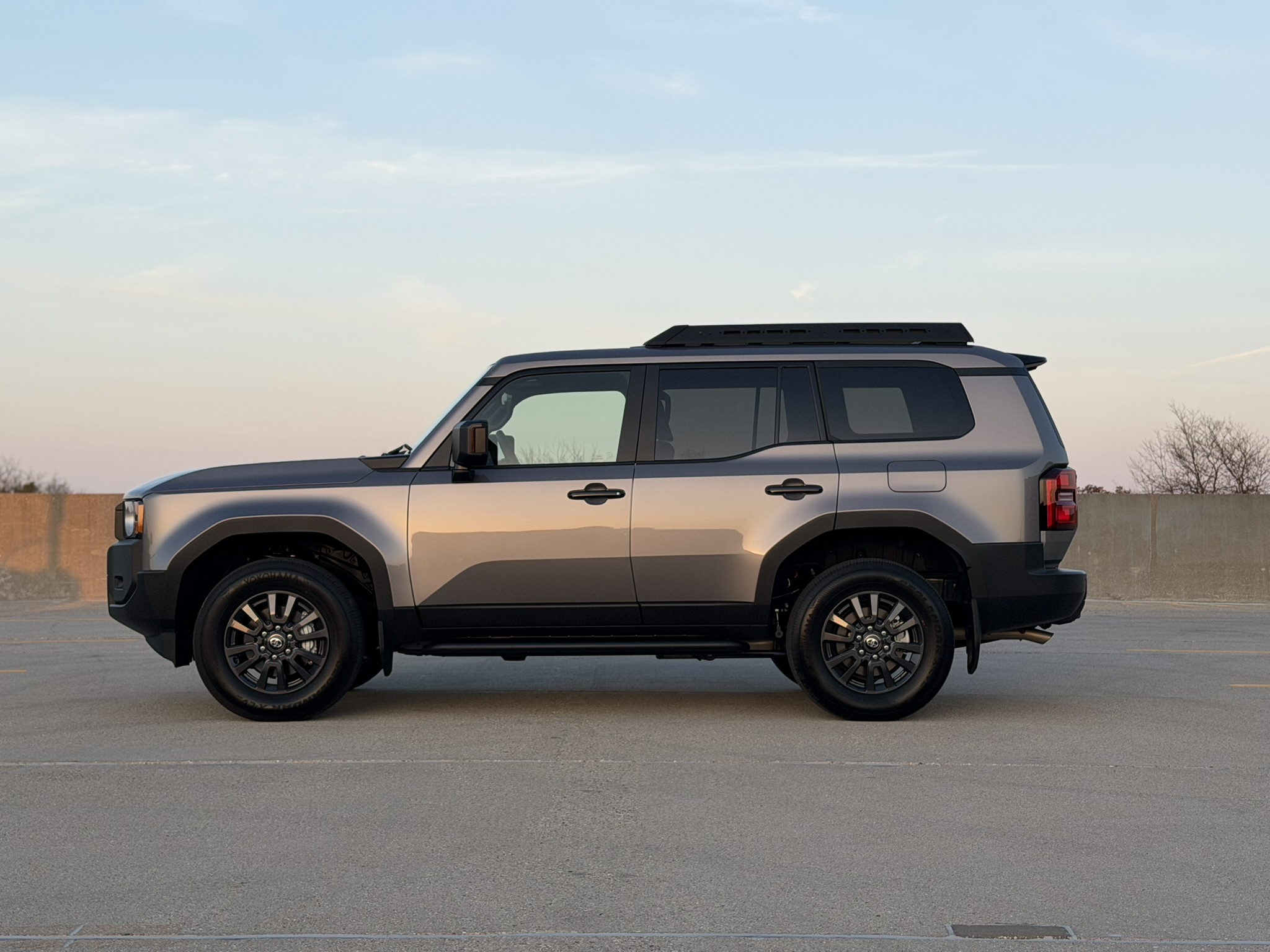
Capability
The off-road credentials are bolstered by features like Multi-Terrain Select, Crawl Control, and an available locking rear differential. The SUV shines in trail performance, easily handling rocky paths, mud, and steep inclines. On-road manners are equally commendable, with a smooth ride and manageable dimensions that make it more urban-friendly than its larger predecessors. I had the chance to take it through some off-road challenges and was impressed with how smooth it traversed up a rock hill thanks to the standard CRAWL Control functionality, which acts as a low-speed, off-road cruise control with five selectable speeds. Downhill Assist Control is another standard off-road feature that helps on the way down by limiting the speed of the vehicle. And on more challenging obstacles, the available Multi-Terrain Monitor system acts like a spotter by leveraging cameras to display the environment around the vehicle on the touchscreen, exposing potential obstacles looming ahead.
Toyota also included center and rear locking differentials as standard equipment for all grades. The electronic locking rear differential can help split the power 50/50 to the rear wheels for improved traction and reduced wheel spinning on rough terrain. Another feature available on Land Cruiser is the front stabilizer bar disconnect mechanism, which increases suspension flex at the push of a button. With the front stabilizer bar disconnected, articulation increases significantly, helping the front tires to stay in contact with the ground. This is especially helpful when driving through uneven moguls and ruts. You can feel and see tires off the ground that would immediately drop at the touch of that stabilizer disconnect button. It makes the Land Cruise extremely versatile on any kind of terrain.
Also standard is Multi-Terrain Select, which is functional in both 4WD High and 4WD Low. This offers adjustable settings to help control wheel spin on a variety of terrain such as Mud, Dirt and Sand. Additional traction aids included are vehicle stability control and an automatic limited-slip differential.
Land Cruiser’s front overhang was decreased for greater approach, providing up to a 31-degree approach, a 25-degree breakover and 22-degree departure angles. Unfortunately, it is not winning any battles when it comes to its ground clearance as it gets from 8 up to 8.7” depending on the grade and tire package. That’s less than the Subaru Crosstrek Wilderness which reaches 9.3”.
Overall, this is highly capable off-road and is a great fit for anyone seeking adventure. The Toyota Land Cruiser was a winner of the Midwest Automotive Media Association’s Favorite Off-Roader in 2025 beating out several of its competition.
Fuel Economy
When it arrived with a full 17.9-gallon tank it offered a range of around 430 miles under ideal conditions. EPA estimates are 22 MPG in the city and 25 MPG on the highway. Combined, it averages 23 MPG. This is a big improvement over the past generation Land Cruiser which averaged 14 MPG combined. Unleaded gasoline with an octane rating of 87 or higher is recommended. After a week of suburban driving, I averaged 23.5 MPG.
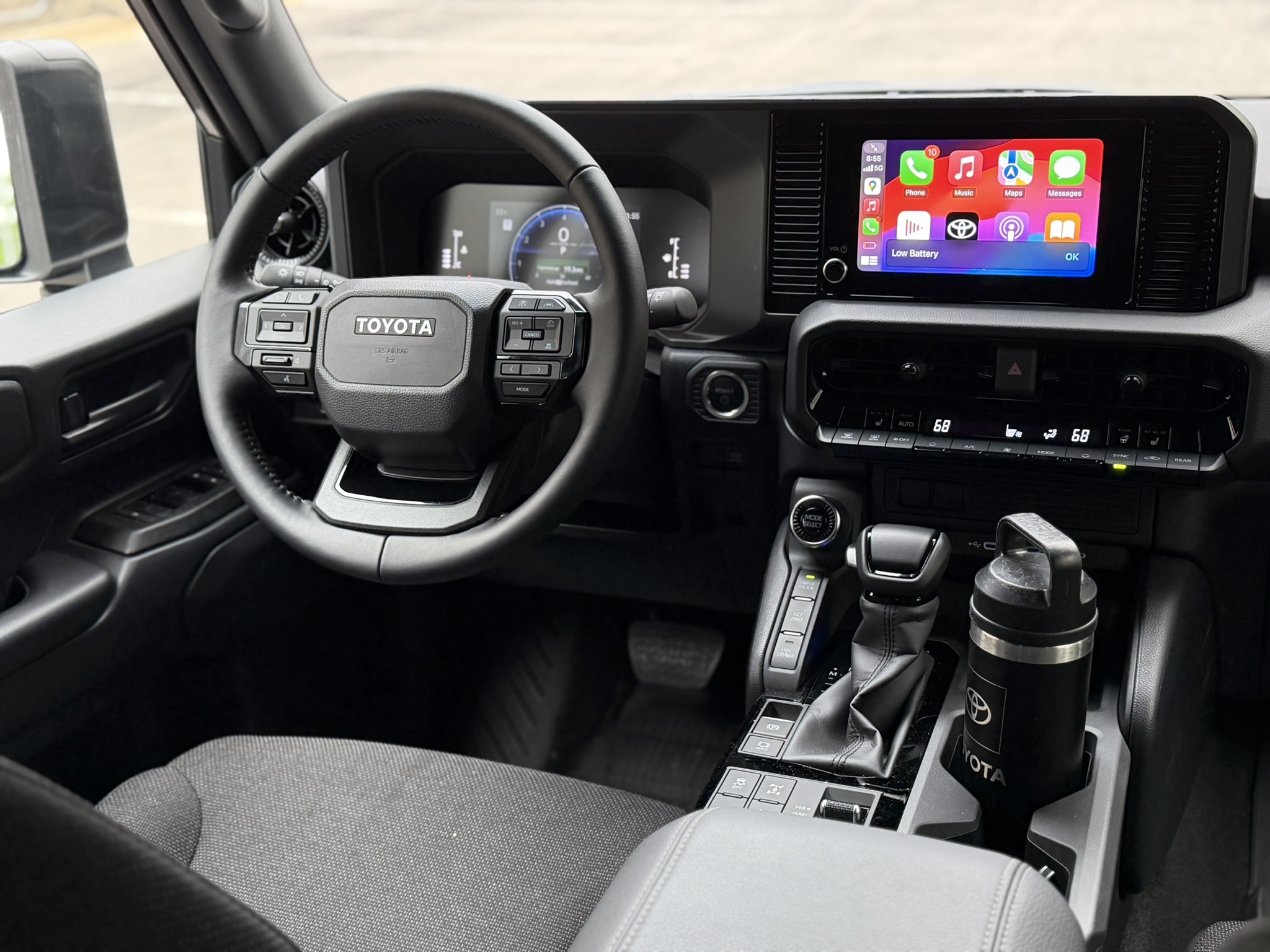
Interior
Inside, the Land Cruiser offers a functional and durable cabin with a mix of modern tech and utilitarian design. Drivers will face either a 7” or an available 12.3-inch digital gauge cluster with four different styles and customizable widgets. The blocky design across the dashboard features an 8.0-inch or optional 12.3-inch touchscreen infotainment system with wireless Apple CarPlay, Android Auto, and integrated navigation. Physical buttons for essential functions ensure usability in rugged conditions. The center console includes a traditional gear selector, dial for drive mode selections, and buttons for the other various off-road controls. 1958 models have a tray to place your mobile device in the center console while the Land Cruiser grade converts that tray to mobile device charger as part of an option package. Overall, the interior felt basic in the 1958 grade, but at the same time included all the basics you’d come to need.
Seating
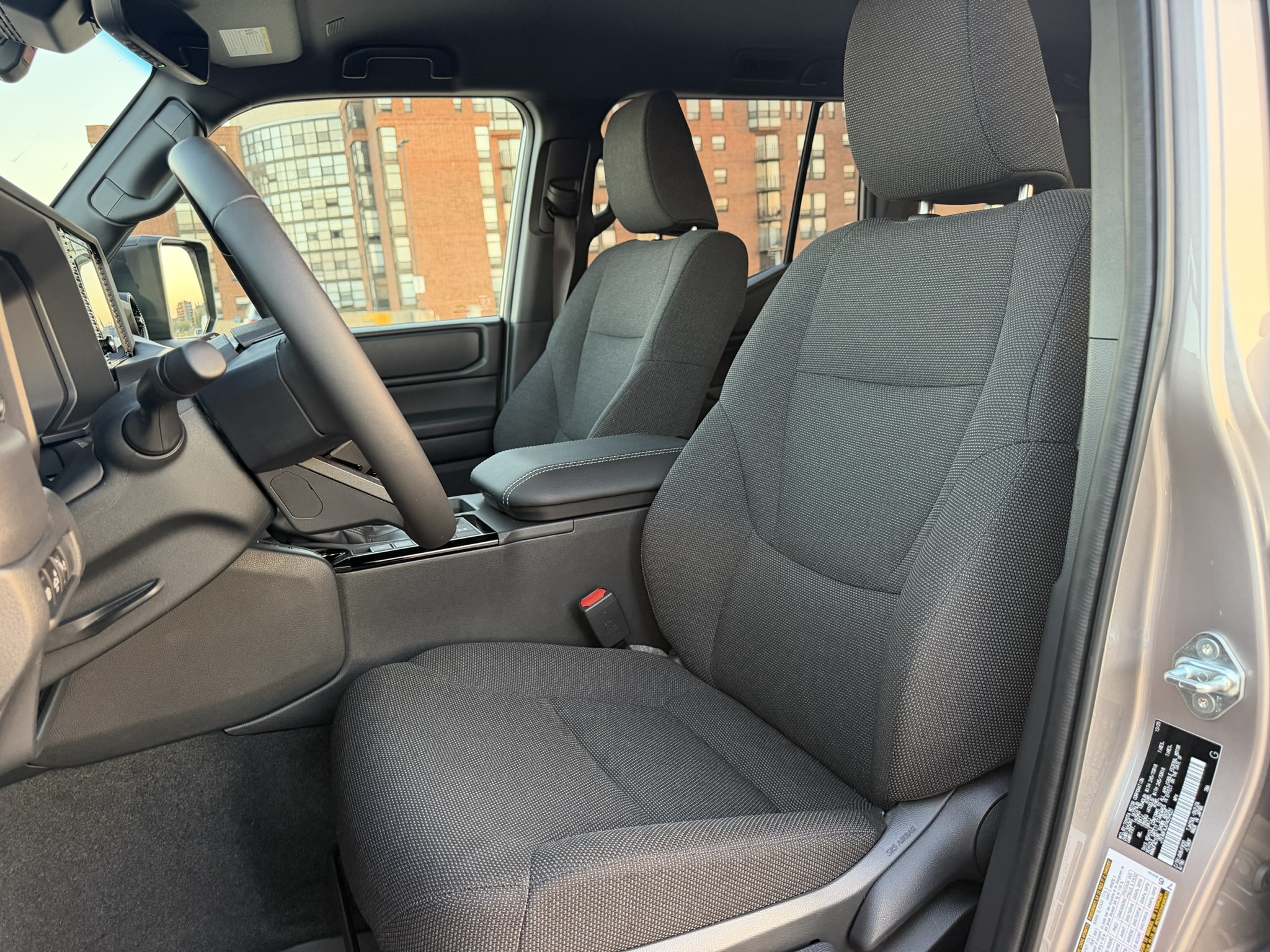
Older Land Cruisers offered three rows of seating, but this latest model only seats five. If you need a third row, consider the very similar Lexus GX. Seating is spacious for front and second-row passengers. Materials emphasize durability over luxury, aligning with the vehicle’s adventurous spirit. There is ample passenger room in both rows with plenty of head, leg, and shoulder room. Cloth upholstery and six-way manually adjustable heated front seats are standard on the 1958. Synthetic leather upholstery, genuine leather upholstery, driver’s seat memory settings and heated and ventilated, eight-way power-adjustable front seats are available. I found the cloth seats to be supportive and comfortable. The cloth material feels durable and ties in nicely with the rest of the retro-inspired design. 1958 grade has a solid roof, but a power tilt/slide moonroof with sunshade is available on the Land Cruiser grade.
Technology
Tech gets a big boost in the Land Cruiser starting with a standard 8” or available 12.3” infotainment touch screen that sits at the top of the dash. Toyota’s latest interface integrates with wireless Apple CarPlay and Android Auto and works seamlessly. I never have issues connecting and staying connected to the Toyota system. The infotainment system is user-friendly and includes additional physical buttons and controls for volume and climate functions that are easy to reach while driving. While wireless integration is standard, the base trim doesn’t come with wireless device charging, so you’ll need an extra cord just in case.
Other available features include a head-up display, satellite radio, a 14-speaker JBL audio system, Dual USB-C charging ports in the front row and two for second-row passengers. There are two more USB-Cs available and a standard 2400-Watt AC inverter house type plug (120V) in the cargo area. If you’re looking for a very modern, tech-forward vehicle the Land Cruiser is not it. With a focus on capability, the Land Cruiser will keep you comfortable inside catering to your basic needs, but that’s about it.
Cargo
The Land Cruiser offers a fair amount of cargo room in the back with 46.2 cubic feet of space available. Be wary of the higher load floor, thanks to the hybrid battery which can make loading and unloading a bit cumbersome. The rear seats can fold flat to create a level loading surface, maximizing utility. It also comes with multiple tie-down points to secure items. Folding the second row expands the cargo area to 82.1 cubic feet. Standard is a manual tailgate, but a power tailgate is available. Additionally, the back glass in the liftgate does lift open separate from the door.
Safety
All 2026 Land Cruiser models come standard with Toyota Safety Sense 3.0, Toyota’s suite of active safety and convenience systems. This suite of features includes:
• Pre-Collision System with Pedestrian Detection
• Lane Departure Alert with Steering Assist
• Full-Speed Range Dynamic Radar Cruise Control
• Lane Tracing Assist
• Road Sign Assist
• Automatic High Beams
• Proactive Driving Assist
Proactive Driving Assist is new to Toyota Safety Sense. When system operating conditions are met, using the vehicle’s camera and radar, this system is designed to provide gentle braking into curves or gentle braking and/or steering to help support driving tasks such as distance control between a preceding vehicle, pedestrian, or bicyclist. Enhancements were also made to other standard Safety Sense features.
Other available features include Blind Spot Monitor (BSM), which is designed to help detect and warn you of vehicles approaching or positioned in the adjacent lanes and Rear Cross Traffic Alert (RCTA) for added peace of mind by helping to detect vehicles approaching from either side while backing out and alerting you with a visual and audible warning. Hill Start Assist Control (HAC) also comes standard.
Final Statement
The Toyota Land Cruiser 1958 is not the rational choice in the midsize SUV segment and that’s partly why people love it. It blends authentic off-road capability, retro styling, and Toyota durability into a package that feels far more special than many modern SUVs. But the tradeoff is a cabin that can feel too basic for the money and fuel economy that doesn’t fully justify the hybrid badge. If you value heritage styling, simplicity, and genuine trail capability, the 1958 is hugely appealing. If you want maximum comfort and tech for the price, the higher Land Cruiser trim (or even a loaded 4Runner) may make more sense.