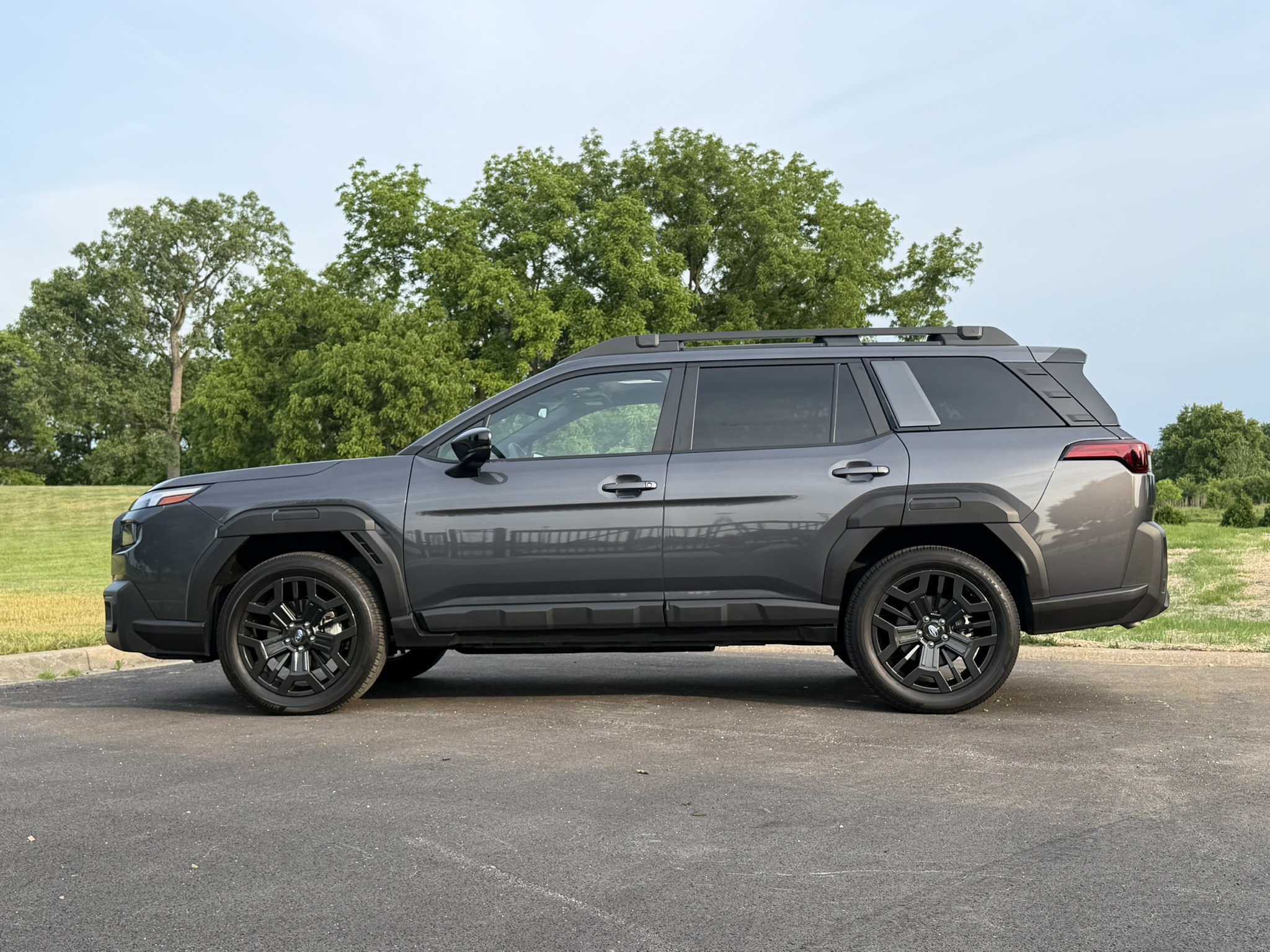
2026 Subaru Outback
A staple in the lineup gets a radical overhaul
Test Vehicle: 2026 Subaru Outback Limited XT
Powertrain: 2.4L DOHC Turbo Boxer
Exterior Color: Magnetite Gray Metallic
Interior Color: Satin Black Leather
Notable Options: N/A
Price as tested: $45,815 (with destination charge)
Pros: Standard AWD, Improved Technology, Versatile Interior, Quality Materials
Cons: Love/Hate Exterior Redesign, More SUV/Less Wagon, CVT Remains, Higher Price
The original Outback station wagon was derived from the wagon variant of the second-generation Subaru Legacy. The first-generation Legacy, which made its debut in 1989, did not receive the cosmetic and suspension modifications to create an Outback version. Subaru offered a Legacy Outback option package for the 1995 model year that came with the all-wheel drive model, which added a compressed air strut height adjustable suspension, a luggage rack, a skid plate, and mud flaps. The Legacy name was dropped in 1999 with the launch of the second generation known as just the Subaru Outback.
The 2026 Subaru Outback enters an all-new seventh generation and represents the biggest redesign in the model's 30-year history. While previous Outbacks blurred the line between wagon and SUV, the 2026 model embraces a more traditional SUV appearance with a boxier profile, taller roofline, and more rugged styling. It is now available in six trims known as Premium, Limited, Touring, Limited XT, Touring XT, and Wilderness.
There are two powertrains available that include a 2.5L naturally aspirated BOXER 4-cylinder that generates 180 horsepower and 178 lb-ft of torque. Higher trims come with a 2.4L turbocharged BOXER 4-cylinder that pushes out 260 horsepower and 277 lb.-ft of torque. All models come standard with AWD and CVT automatic transmission.
Prices start at $34,995 for the Premium model and climb to a starting price of $47,995 for the fully equipped Touring XT. The Outback occupies a unique space between a wagon and midsize SUV, but shoppers will likely cross-shop with vehicles like the Toyota RAV4, Hyundai Tucson, Kia Sportage, Mazda CX-50 and Honda Passport. I spent a week in the Outback Limited XT that checked in at $45,815 and here’s what stood out…
Exterior Design:
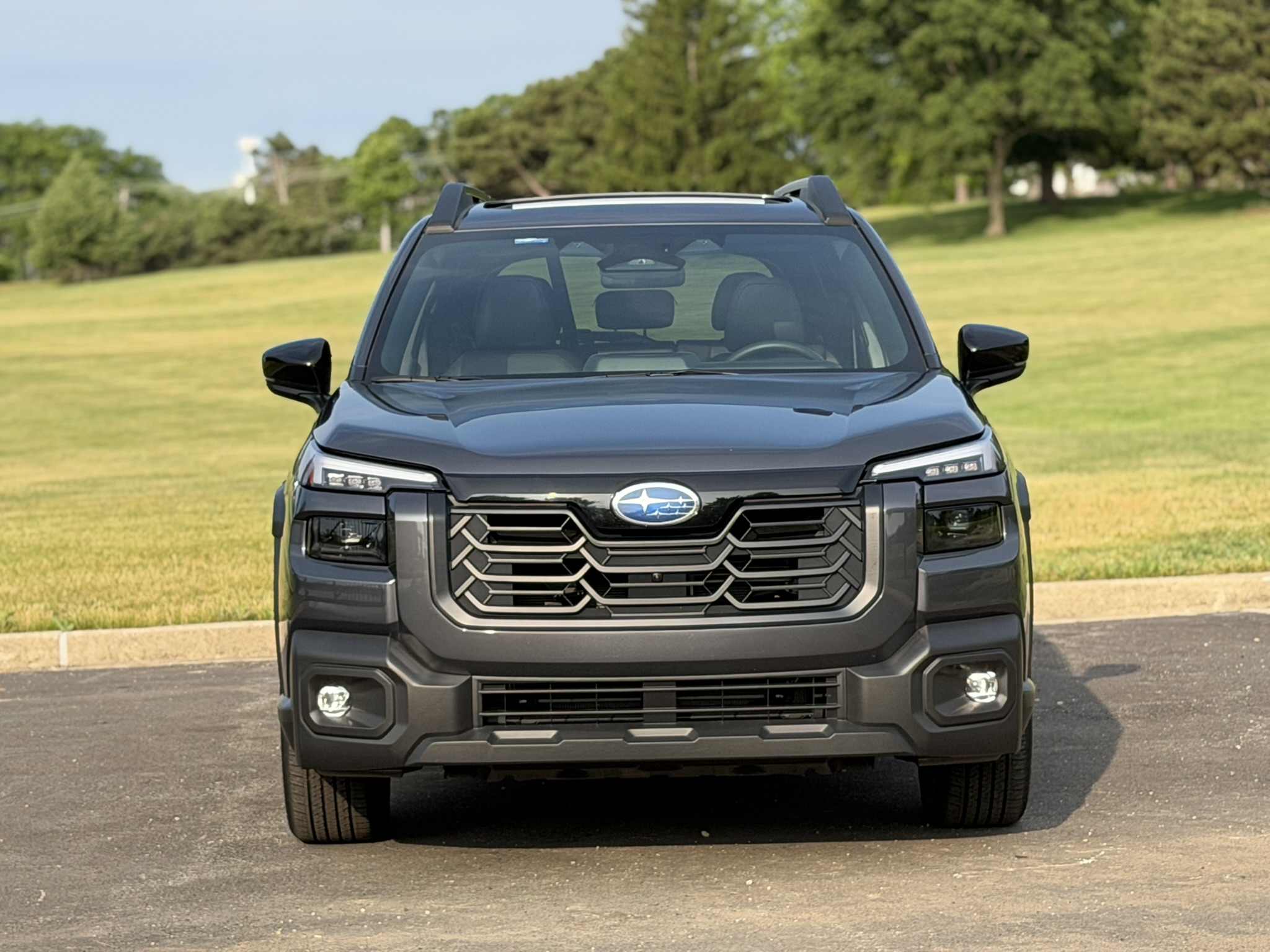
Subaru has taken the well-loved wagon body style and given it a more SUV look with bigger proportions, higher ground clearance, and a whole lot of body cladding. Up front, it is considerably more aggressive than before with a larger, upright grille that dominates the front fascia, flanked by slim LED lighting elements and vertically oriented headlamp assemblies. Heavy-duty black cladding and a more sculpted bumper give the Outback a tougher, adventure-ready appearance. The design projects more confidence and presence on the road, especially compared with the softer styling of the previous generation. The front of the Wilderness model is even more aggressive with a different grille, no emblem, copper accents, and even more cladding. Longtime Outback fans may find it overly aggressive and too much SUV influence.
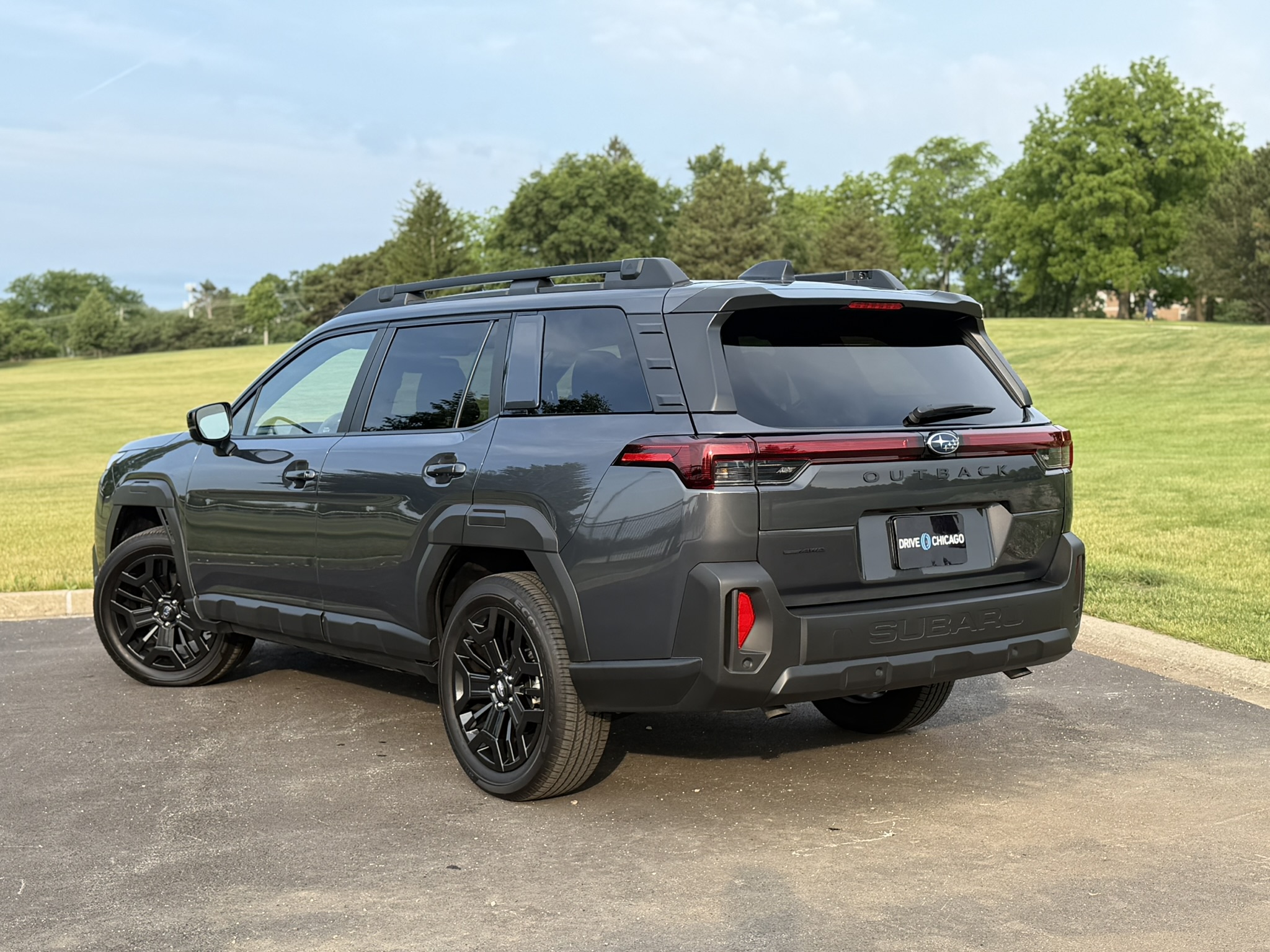
The side profile showcases a taller and flatter roofline, the windows are more upright, and the body sides feature sharper character lines. Overall dimensions changed modestly, but the straighter surfaces create a much larger visual footprint. There is a significant amount of body cladding around the wheels and lower portion of the Outback. There’s an added trim piece over the rear side window that is something Range Rover has long done. It has started to look more SUV with its upright proportions compared to previous generations that were more clearly defined as a wagon. Around back, it gets a lightbar that stretches across the hatch, Subaru embossed in the bumper, and a more squared off shape. Cladding carries around back on the pillars and bumper. The cladding materials are a different type of composite that almost seem like 3-D printed. Overall, the design is a big change for Subaru loyalists, and the new Outback looks and feels bigger. It will be interesting to see if loyal owners continue buying this model or consider an alternative. I personally was a bigger fan of the previous generation, but this one is growing on me.
Powertrains:
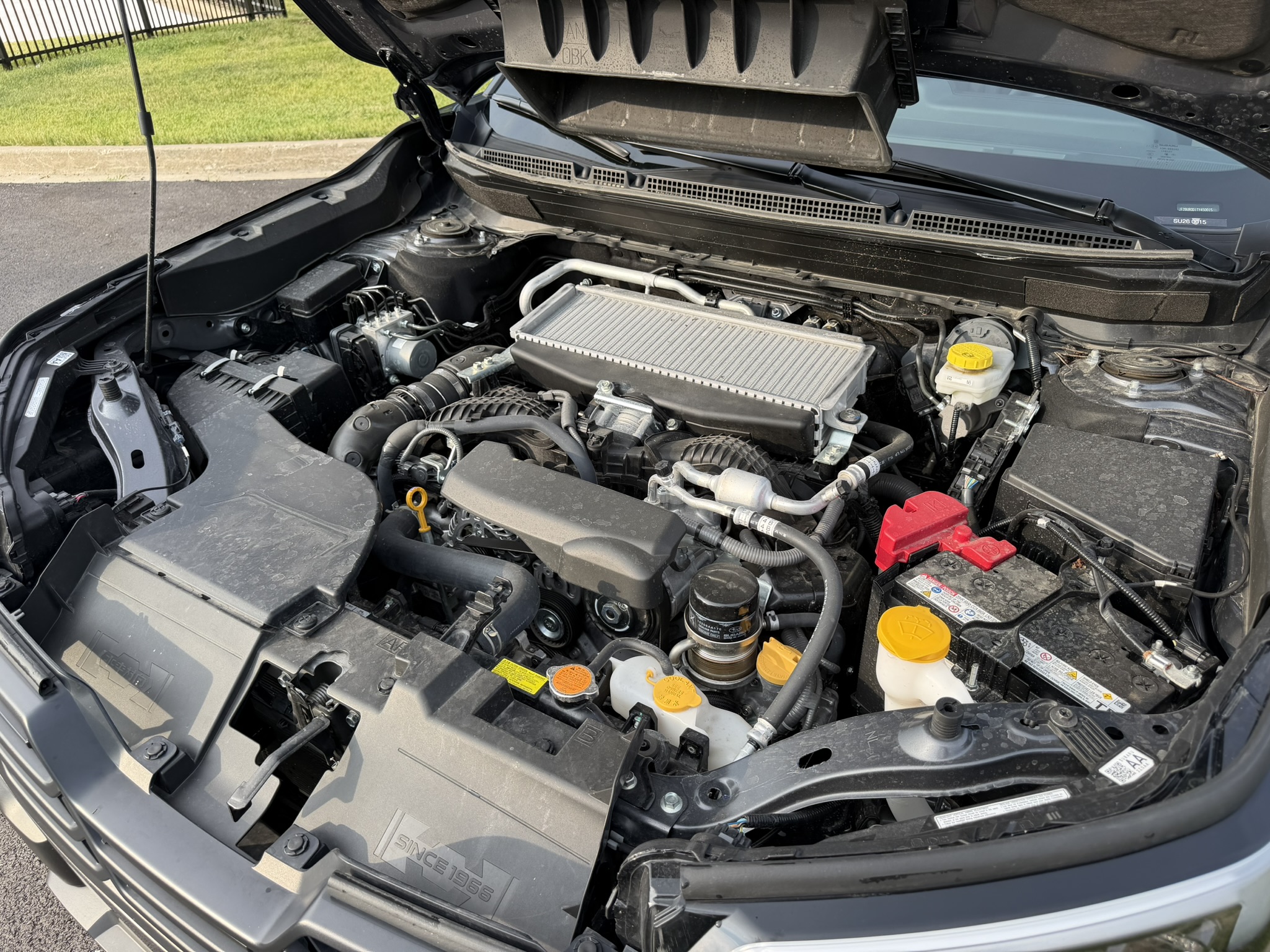
The 2026 Subaru Outback continues with two familiar BOXER four-cylinder engines, both paired with a continuously variable transmission and Subaru's standard Symmetrical All-Wheel Drive system. The standard 2.5-liter engine produces 180 horsepower and 178 lb.-ft of torque. Around town it provides adequate acceleration, but it isn't particularly quick. It will get from 0-60 MPH in approximately 8.5 seconds. I spent time in a higher trim with the turbocharged 2.4-liter. With 260 horsepower and 277 lb.-ft of torque available from 2,000 rpm, acceleration is notably stronger and highway passing requires much less effort. It will get from 0-60 MPH in around 6.3 seconds which is not bad for a rugged family hauler. The turbo engine is the powertrain most buyers will appreciate if they regularly travel with passengers, tow, or drive in mountainous areas.
The ride is tuned for comfort rather than performance. The suspension absorbs road imperfections very well and delivers a smooth ride for all passengers. Highway drives are very calm with Subaru’s improved sound absorption for 2026. While it's comfortable for most driving, it’s not a vehicle that handles corners with ease. There is significant body roll and steering is stiff. Steering effort is light, making parking lots and urban driving easy. The wheel feels precise enough to place the vehicle accurately, but it doesn't provide a great deal of feedback from the road surface. Although the 2026 Outback has adopted a taller, more SUV-inspired design, it retains a driving character that feels more composed and car-like than many crossovers. Its horizontally opposed BOXER engine sits low in the chassis, helping lower the vehicle's center of gravity and enhance stability.
The Outback does come with several drive modes that include Intelligent, Sport (S), Sport Sharp (S#), and various X-Modes such as Snow/Dirt Deep or Snow / Mud. Each mode tweaks the tuning to optimize performance for the various road conditions. The revised AWD software can now use steering-angle information to help distribute power more effectively, which improves stability and confidence when cornering on slippery surfaces.
Fuel Economy:
When the Outback arrived with a full 18-gallon tank it offered a driving range of around 440 miles on the turbo model or 480 on the base 2.5L. EPA ratings vary depending on engine choice, but Subaru prioritizes capability and all-weather traction over maximum MPG. The 2.5L BOXER is rated at 25 / 31 / 27 MPG city / highway / combined while the 2.4L Turbo is rated at 21 / 29 / 24 MPG city / highway / combined. The 2026 Outback delivers solid, but not class-leading fuel efficiency for a midsize AWD crossover.
Interior / Technology:
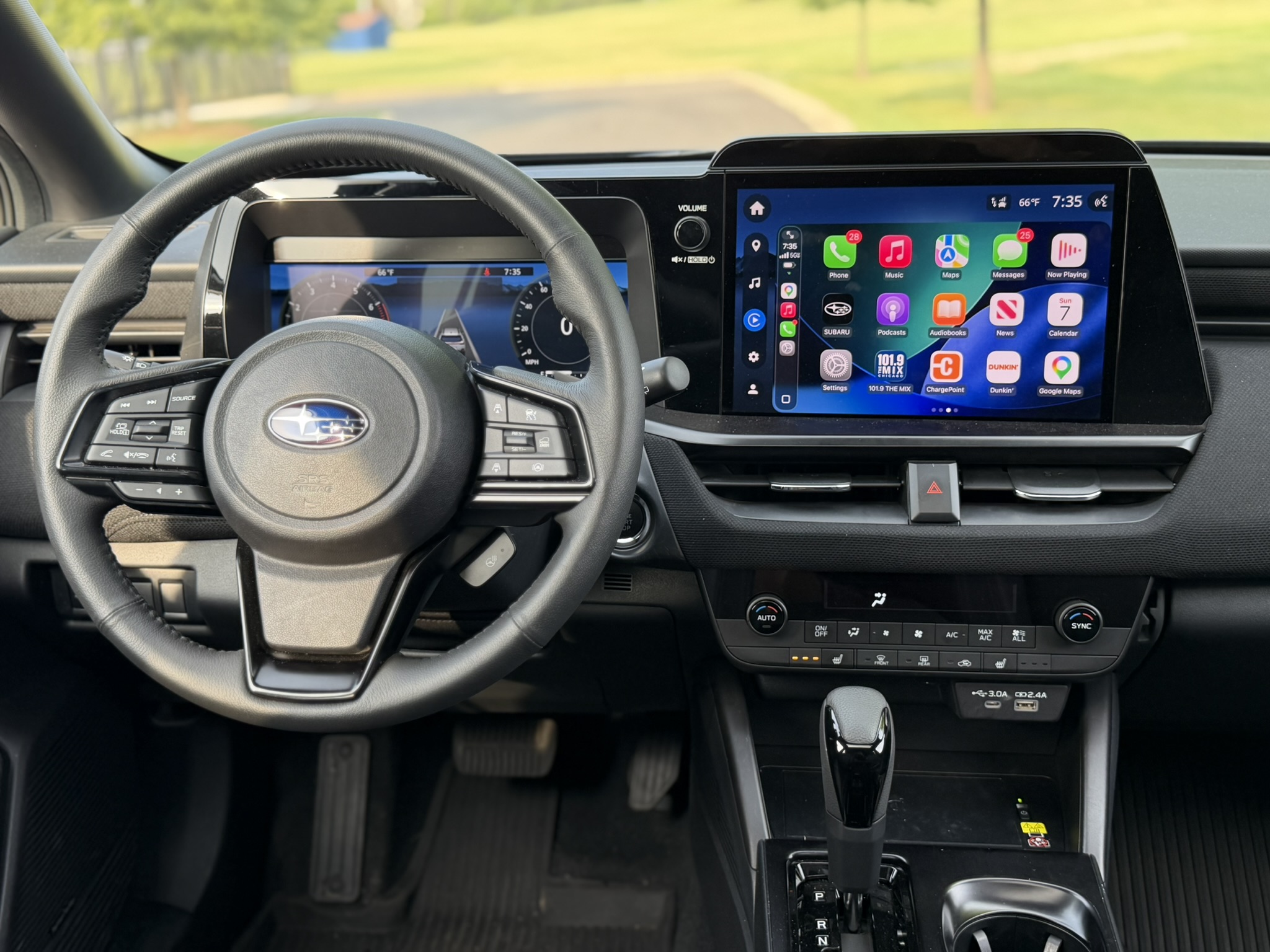
Hopping inside, the 2026 Outback is also all new and a huge improvement. While I’m still on the fence for the exterior, I genuinely like the interior materials, layout, and technology. It shifts from the more utilitarian feel of the previous generation to a cabin that is more modern, more digital, and noticeably more premium in upper trims, while keeping Subaru’s signature focus on durability and usability. Each trim will vary in overall materials but there is a nice mix of soft touch materials, fabrics, leather and more. Drivers will face a new standard 12.3” digital gauge cluster behind the steering wheel with multiple display themes and integrated EyeSight driver assist features.
At the center of the dash is an all-new 12.1” infotainment touchscreen that is standard across the lineup and is now landscape in orientation. The new touchscreen integrates wirelessly with Apple CarPlay and Android Auto and works seamlessly. The menu structure is easy to navigate and graphics are crisp. Many will also be happy to learn that dedicated physical buttons and knobs for climate control have also made a return. The volume knob is placed on the top left side of the infotainment screen, which was slightly hidden behind the steering wheel and a bit of a reach. There is an available wireless phone charger, traditional gear selector, cupholders, and center console storage. Everything is well-laid out and easy to operate.
Other standout available features include a Harman Kardon premium audio system (up to 576 watts, 12 speakers), wireless charging pad, 360-degree camera system, USB-A and USB-C ports front and rear, and Advanced EyeSight driver assistance with enhanced visualization modes. The interior vibe focuses on durability and comfortability. It could be best described as functional ruggedness upgraded with modern tech. It’s not trying to be a luxury cabin like a Lexus or Mazda CX-50, but it is significantly more refined, more digital, and easier to live with than before, especially in Limited and Touring trims.
Seating:
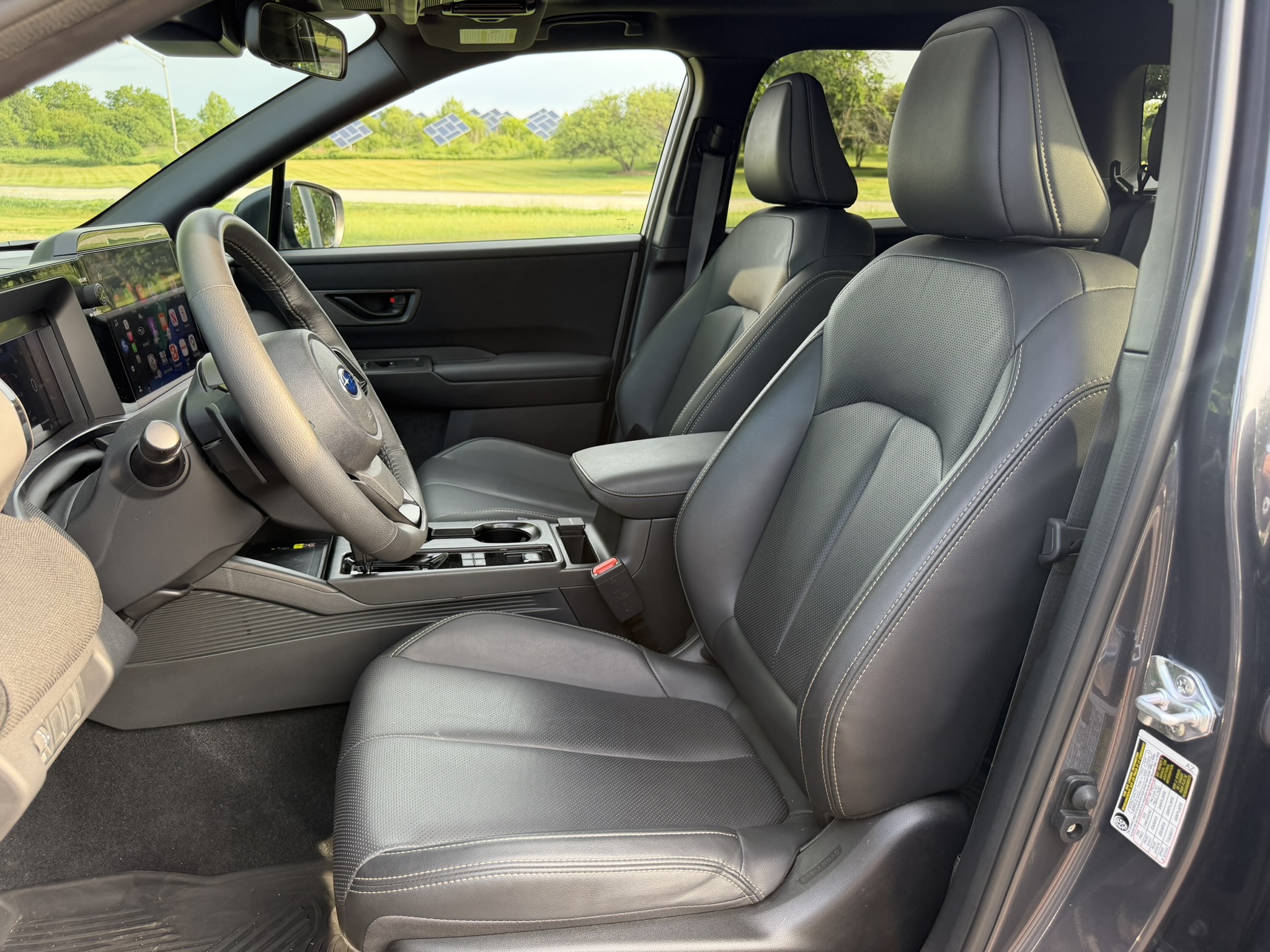
As it has always done, the Outback continues to seat up to five passengers. There is even more head, leg, and shoulder room up front than before. The seats are very comfortable with good cushioning, relaxed bolstering, and easy adjustability. It’s easy for drivers/passengers of all sizes to adjust seats for good visibility and positioning. Base models come in a StarTex water-resistant synthetic upholstery while higher trims move to leather or Nappa leather. If you choose a higher trim like Touring, the Outback approaches near-luxury seating comfort. In lower trims, the seats are still very comfortable but clearly prioritize rugged practicality over premium softness.
Rear seats offer ample leg room for the class, more headroom than before, and wide door openings for easy entry/exit. Even with three adults across the back, it feels reasonably comfortable with room to breathe. The rear seats aren’t as comfortable as the front, but still good enough for long road trips. In upper trims, Subaru adds additional comfort features such as available ventilated front seats, heated front seats (standard on most trims), and an available 10-way power adjustment with lumbar support.
Cargo Space:
As it has always been a practical vehicle with a good amount of cargo space, it gets even better for 2026. There is 34.6 cubic feet behind the rear seats and 80.5 cubic feet with those seats folded flat. That maximum figure is among the best in the class and is one of the Outback’s biggest advantages over rivals like the Toyota RAV4, Honda CR-V, and Mazda CX-50. The rear cargo area has a wide, flat floor and a tall opening through the hatch that makes it easy to load / unload.
Subaru takes it a step further and shows it knows its customers. Where the Outback really shines is in real-world “what fits?” scenarios such as accommodating dogs/crates which is easy because of height and square rear opening. It can also easily accommodate flat-pack furniture, camping gear, and even bikes. It is very easy to organize due to flat surface and tie-down points plus a rubber cargo mat is easy to clean. I was able to haul fresh flowers, gardening materials, mulch and dirt with ease in the Outback.
Safety / Driver Assist:
Standard on all 2026 Outback models is the latest version of the award-winning EyeSight Driver Assist Technology. The enhanced system operates more smoothly and quickly and under a greater range of conditions. These improvements are thanks to a wider field of view, updated control software and the addition of an electric brake booster. EyeSight can identify bicycles and pedestrians at intersections sooner and, when necessary, alerts the driver and applies braking to avoid collisions.
Other standard safety features in the Outback include:
- Adaptive cruise control
- Automatic high beams
- Evasive steering assist
- Forward collision warning
- Forward automatic emergency braking
- Lane-departure warning
- Lane-keep assist
- Pedestrian and cyclist detection
- Rear-seat reminder
- Pre-Collision Braking (automatic emergency braking)
- Lane Sway Warning
Additional available active safety features include Reverse Automatic Braking and Blind-Spot Detection with Lane Change Assist and Rear Cross-Traffic Alert. The Driver Monitoring System and DriverFocus Distraction Mitigation System are also standard on all trims and detects signs of driver fatigue or distraction, issues alerts if attention is not on the road, and stores driver profiles (seat position, mirrors, climate settings). Another great feature is the updated highway driver assistance. On select trims there is hands-free assist that allows hands-free steering support on approved highways. It works only under specific conditions and requires driver attention monitoring and is designed to reduce fatigue, not replace driver control.
The 2026 Subaru Outback is one of the most comprehensively equipped safety vehicles in its class, with nearly all key driver-assist features included as standard equipment. Subaru’s strategy is clear: instead of making safety optional, it’s built into the entire lineup from the start.
Final Statement:
The Subaru Outback is a unique vehicle that stands alone in many cases. It has been one of the last mainstream wagons still on the market and has a loyal following. This latest overhaul inside and out has started to blur the lines more between crossover and wagon. There are some really good things happening with this new model, but also some questionable exterior design choices (in my opinion). Overall, it’s a great option for many buyers. The turbo powertrain is quick and comfortable on the road. The interior updates are thoughtful, durable, and spacious. It’s a great alternative to many more traditional crossovers/SUVs in this class.