2026 Ford Ranger
A modern midsize truck, offering muscle, tech, and everyday versatility.
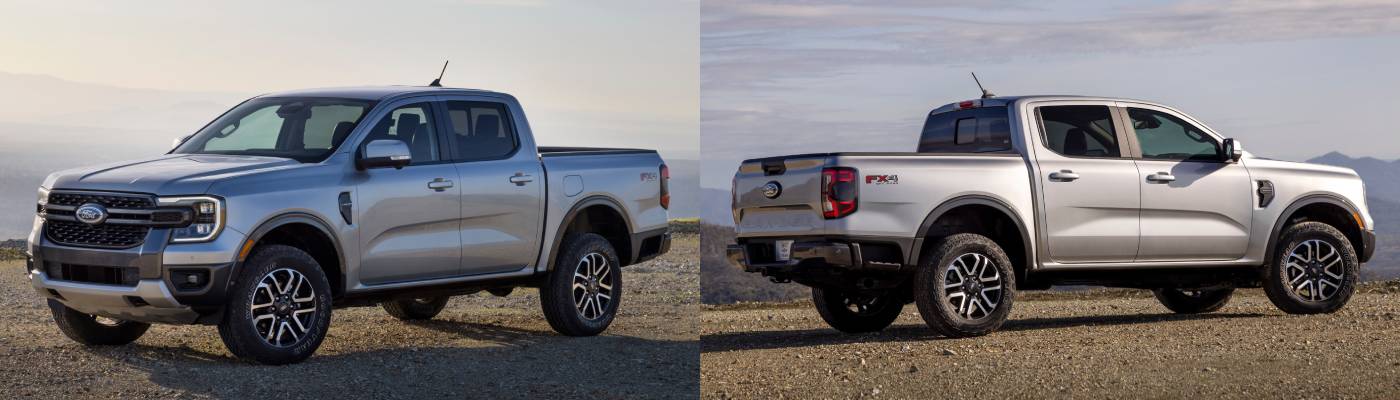
After returning to the U.S. market in 2019 following an eight-year hiatus, the Ranger has steadily evolved into a midsize truck that balances everyday usability with genuine capability. For 2026, the Ranger carries forward the major redesign introduced for 2024, including its wider track, stronger frame, and more modern interior, while adding incremental improvements in technology and refinement. It goes head-to-head with the Chevrolet Colorado, GMC Canyon, Honda Ridgeline, Jeep Gladiator, Nissan Frontier, and Toyota Tacoma. All Rangers sold in the U.S. are crew-cab, five-passenger models with a single 5-foot bed.
Ford offers the 2026 Ranger in XL, XLT, Lariat, and high-performance Raptor trim levels. Powertrain choices begin with a 2.3-liter turbocharged four-cylinder producing 270 horsepower and 310 pound-feet of torque. Optional is a 2.7-liter twin-turbo V6, shared with the F-150 and Bronco, delivering 315 horsepower and 400 pound-feet of torque. At the top of the range, the Ranger Raptor uses a 3.0-liter twin-turbo V6 rated at 405 horsepower and 430 pound-feet of torque. All engines pair with a 10-speed automatic transmission with rear- and four-wheel-drive available. Maximum towing capacity is 7,500 pounds with the 2.3-liter engine, while the V6 models are rated slightly lower due to their performance-oriented tuning
Pricing for the 2026 Ranger starts in the low $30,000s for the XL and climbs into the mid-$40,000s for a well-equipped Lariat, with the Raptor commanding a premium that pushes it into the mid-$60,000 range. Standard features vary widely by trim, but even the base XL includes an 8-inch digital instrument cluster, a 10.1-inch touchscreen, wireless Apple CarPlay and Android Auto, and Ford's Co-Pilot360 safety suite with automatic emergency braking and lane-keeping assist. Higher trims add larger screens, upgraded materials, adaptive cruise control, a 360-degree camera system, and premium audio. The Raptor stands apart with its long-travel suspension, locking differentials, unique bodywork, and specialized off-road electronics. Optional packages across the lineup include towing upgrades, appearance packages, and advanced driver-assistance features that push the Ranger toward a more premium feel than its work-truck roots might suggest.
ENGINE PERFORMANCE
The 2.3-liter EcoBoost four-cylinder remains the workhorse of the Ranger lineup, and it impresses with its broad torque curve and offers good power around town. Acceleration is strong for a base engine, with 0-60 mph times landing in the mid-6-second range, depending on drivetrain. Passing power is confident thanks to the turbocharged torque arriving early and staying consistent through the midrange. The 10-speed automatic transmission pairs well with this engine, delivering smooth shifts and keeping the engine in its power band without excessive hunting. For most buyers, this engine provides more than enough muscle for commuting, towing moderate loads, and light off-roading.
The 2.7-liter twin-turbo V6 transforms the Ranger into a genuinely quick midsize truck. With 315 horsepower and 400 pound-feet of torque, it delivers 0-60 mph times in the low-5-second range, making it one of the quickest trucks in the segment. The engine feels strong and refined, with a deep well of torque that makes highway merging and passing effortless. The 10-speed automatic handles the added power with confidence, though its programming is slightly more aggressive to match the engine's performance-oriented nature. This engine is the sweet spot for drivers who consistently max out the payload or tow or those that want a truck that feels genuinely energetic without stepping up to the Raptor.
The Ranger Raptor's 3.0-liter twin-turbo V6 is a different animal entirely. With 405 horsepower and 430 pound-feet of torque, it rockets to 60 mph in the mid-4-second range. The engine delivers a thrilling surge of power accompanied by a deep, aggressive exhaust note that sets the Raptor apart from anything else in the class. The transmission's shift logic is tuned for performance, holding gears longer and responding instantly to throttle inputs. Whether blasting across desert terrain or simply merging onto the highway, the Raptor feels eager, muscular, and unmistakably special.
FUEL ECONOMY
Fuel economy varies significantly depending on the engine and drivetrain. The 2.3-liter EcoBoost is the most efficient, with EPA estimates of 21 mpg city and 26 mpg highway for rear-wheel-drive models, and slightly lower numbers for four-wheel-drive versions. With a fuel tank capacity of 18 gallons, highway range can exceed 450 miles under ideal conditions. Real-world results tend to land slightly below EPA estimates, especially when the truck is loaded or driven aggressively, but the 2.3-liter remains competitive within the segment.
The 2.7-liter V6 sacrifices some efficiency for its added performance. EPA estimates fall into the 19 mpg city and 24 mpg highway range for rear-wheel-drive models, with four-wheel-drive versions dropping by one or two mpg. The same 18-gallon tank yields a highway range closer to 400 miles. In real-world driving, the V6 tends to return numbers in the high teens to low twenties, depending on usage. For buyers who prioritize power over efficiency, the trade-off is acceptable.
The Raptor's 3.0-liter V6 is the thirstiest of the group, with EPA estimates around 15 mpg city and 18 mpg highway. Its off-road tires, lifted suspension, and performance tuning all contribute to higher fuel consumption. Real-world numbers often dip into the mid-teens, especially during spirited driving or off-road use. The Raptor uses the same 18-gallon tank, giving it a noticeably shorter range than other trims, but this is expected for a high-performance off-road truck.
FOUR-WHEEL-DRIVE & OFF-ROAD SYSTEMS
Ford's base four-wheel-drive system in the Ranger is a part-time setup with a two-speed transfer case, offering 2H, 4H, and 4L modes. It provides strong traction in slippery conditions and is well-suited for towing, off-roading, and winter driving. Drive modes include Normal, Eco, Sport, Tow/Haul, Slippery, Mud/Ruts, and Sand, each adjusting throttle response, shift mapping, and traction control behavior. The system is intuitive and effective, giving drivers confidence in a wide range of conditions.
The Raptor elevates the Ranger's off-road capability to an entirely different level. It features a full-time four-wheel-drive system with locking front and rear differentials, Fox Live Valve shocks, long-travel suspension, and reinforced underbody protection. Additional drive modes include Baja, Rock Crawl, and Off-Road, each tailored for specific terrain. The Raptor's off-road electronics, including Trail Control and Trail Turn Assist, make it one of the most capable factory off-road trucks in the midsize segment.
RIDE QUALITY
Ride quality in the standard Ranger trims is generally well-controlled, with a firm but compliant suspension that balances comfort with capability. The truck absorbs most bumps with confidence, though sharper impacts can be felt due to the leaf-spring rear suspension. The Lariat trim offers the most refined ride, thanks to its upgraded dampers and more premium tires, making it the best choice for buyers who prioritize comfort.
The Raptor's suspension is significantly softer in normal driving, designed to soak up high-speed off-road impacts. On pavement, this results in a slightly floatier feel, though the Fox shocks do an admirable job of maintaining control. The Raptor's ride is unique-plush over rough terrain yet composed enough for daily driving, though buyers should expect more body motion than in the standard trims.
All models suffer from a bounciness that's common to midsize pickup trucks. It's most often felt when going over very bumpy roads or railroad tracks, but can also be felt on rough concrete surfaces. This issue is exacerbated somewhat on the Raptor.
HANDLING & ROADHOLDING
The Ranger handles well for a midsize truck, with steering that is accurate and nicely weighted. Body roll is present but controlled, and the truck feels stable in corners without feeling overly stiff. There is, of course, some judder when rounding fast and bumpy corners, but that's to be expected with a solid rear axle and leaf springs. Braking performance is strong, with a firm pedal and good modulation. The 2.7-liter V6 models feel the most balanced, offering a blend of power and chassis control that makes them enjoyable on winding roads.
The Raptor, despite its off-road focus, handles surprisingly well thanks to its wider track, coil-spring rear suspension, and firmer shocks. Body lean is more pronounced, but grip levels are high, and the steering remains precise. Braking distances are longer due to the larger tires, but pedal feel remains consistent.
INTERIOR NOISE
Interior noise levels in the Ranger are competitive for the segment. Wind and road noise are well-managed, especially in the Lariat, which benefits from additional sound insulation. The 2.3-liter and 2.7-liter engines are quiet during cruising, though they can sound coarse under heavy acceleration. Compared to competitors, the Ranger is quieter than the Tacoma and Gladiator but slightly louder than the Ridgeline and Colorado.
The Raptor introduces more tire and wind noise due to its aggressive off-road tires and wider stance, but the cabin remains livable for daily use.
INTERIOR DESIGN & MATERIALS
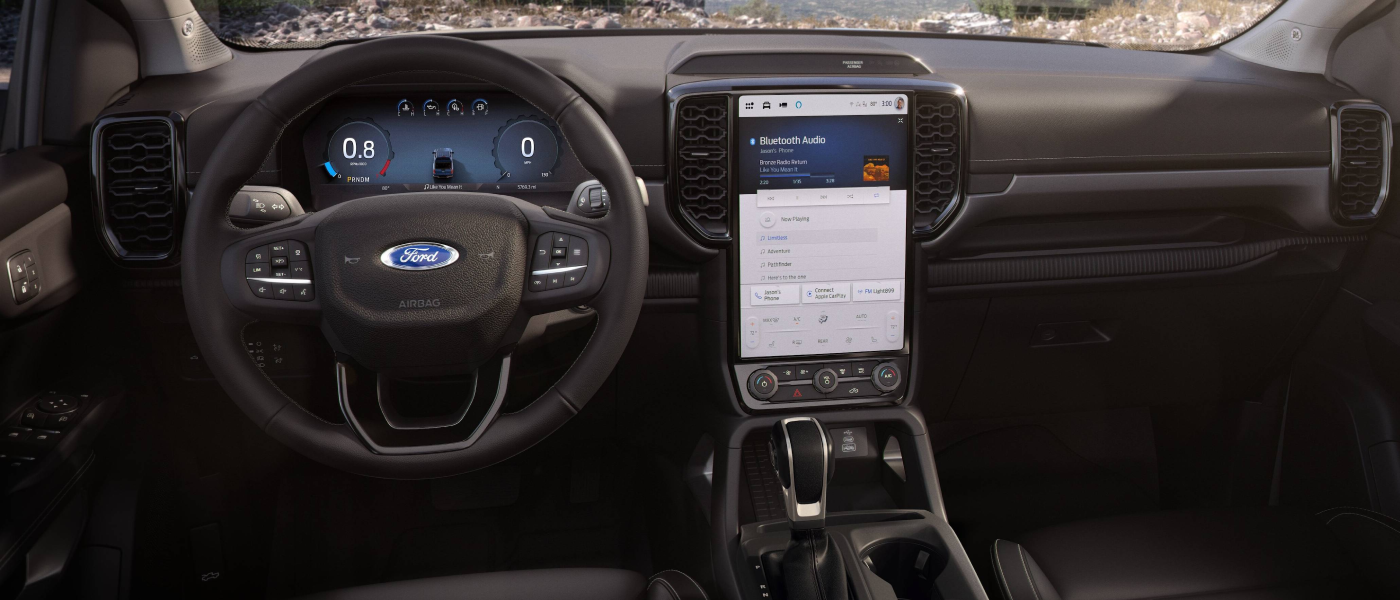
The Ranger's interior blends ruggedness with modern design. The dashboard features a vertical touchscreen, clean lines, and intuitive controls. Materials vary by trim, with the XL using durable plastics and the Lariat offering soft-touch surfaces, leather upholstery, and ambient lighting. The overall design feels functional and contemporary, with a layout that prioritizes usability.
The Raptor adds unique touches such as sport seats, contrast stitching, and performance-oriented graphics in the digital cluster. It feels more premium than expected for an off-road truck, with a sense of purpose that matches its capabilities.
INTERIOR FUNCTIONALITY
Ford has done an excellent job making the Ranger's interior easy to use. Physical knobs and buttons remain for key functions, while the touchscreen is responsive and logically organized. Storage is plentiful, with large door pockets, a deep center console, and clever under-seat storage in the rear. Visibility is good thanks to the upright seating position and large windows, and the available 360-degree camera system makes parking and maneuvering easier.
TECHNOLOGY & SAFETY
Technology is a strong point for the Ranger. The standard 10.1-inch touchscreen can be upgraded to a 12-inch unit, both running Ford's SYNC 4A system with wireless smartphone integration. Available features include a digital instrument cluster, wireless charging, premium audio, and connected navigation. Safety features include automatic emergency braking, lane-keeping assist, blind-spot monitoring, rear cross-traffic alert, adaptive cruise control, and a 360-degree camera system. Higher trims add more advanced driver-assistance features, making the Ranger one of the more technologically advanced trucks in its class.
PASSENGER SEATING
All Rangers are crew-cab models with seating for five. Front seats are supportive and offer good adjustability, with the Lariat and Raptor providing the most comfort thanks to their upgraded materials and bolstering. Rear-seat space is competitive for the segment, offering just enough room for adults on shorter trips and ample space for children. Entry and exit are easy thanks to the wide door openings and upright seating position.
CARGO CAPACITY
The Ranger's 5-foot bed offers competitive cargo capacity, with enough room for home-improvement materials, camping gear, or motorcycles. Though there is no lockable covered storage, Ford offers a variety of bed accessories, including tie-downs, bed lighting, a spray-in liner, and a 400-watt AC power outlet. Interior storage is generous, with multiple USB ports, available household power outlets, and clever compartments throughout the cabin. The rear seats fold to reveal additional storage, making the Ranger versatile for both work and family use.
BOTTOM LINE
The 2026 Ford Ranger stands out as one of the most well-rounded midsize trucks on the market. Its strengths include strong engine options, a modern and functional interior, advanced technology, and impressive towing capability. The Raptor adds a level of performance and off-road prowess unmatched by most competitors. Weaknesses include fuel economy that trails some rivals and a ride that can feel firm and busy in lower trims. Still, the Ranger's combination of capability, refinement, and technology makes it a compelling choice in a crowded segment.
Against its competitors, the Ranger holds its own in performance, features, and value. The Tacoma offers more variety in off-road trims, the Ridgeline is smoother on pavement, and the Colorado has a more premium interior, but the Ranger strikes an appealing balance. For most buyers, the XLT with the 2.7-liter V6 represents the best blend of price, performance, and features, offering a lively driving experience without the Raptor's premium price.