2026 Honda Prelude
An iconic nameplate returns, but is it worthy? Yes.
Test Vehicle: 2026 Honda Prelude
Powertrain: 2.0L 4-Cylinder
Exterior Color: Boost Blue
Interior Color: White
Options: Paint ($455)
MSRP as tested: $43,650 (With Destination & Delivery)
Pros: Handling Dynamics, Build Quality, Fuel Economy, Liftback Design
Cons: Starting Price, Overall Power, Rear Headroom
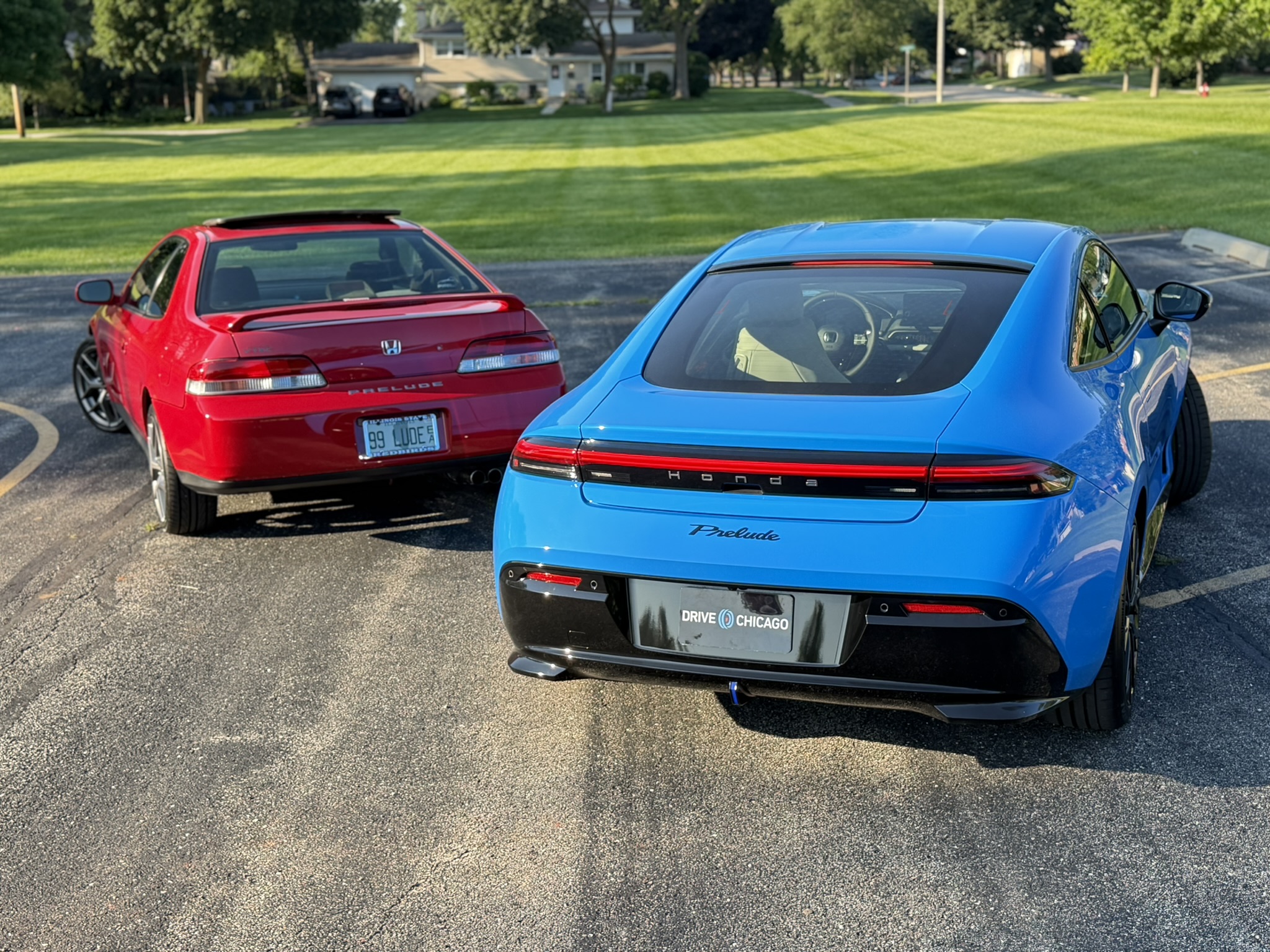
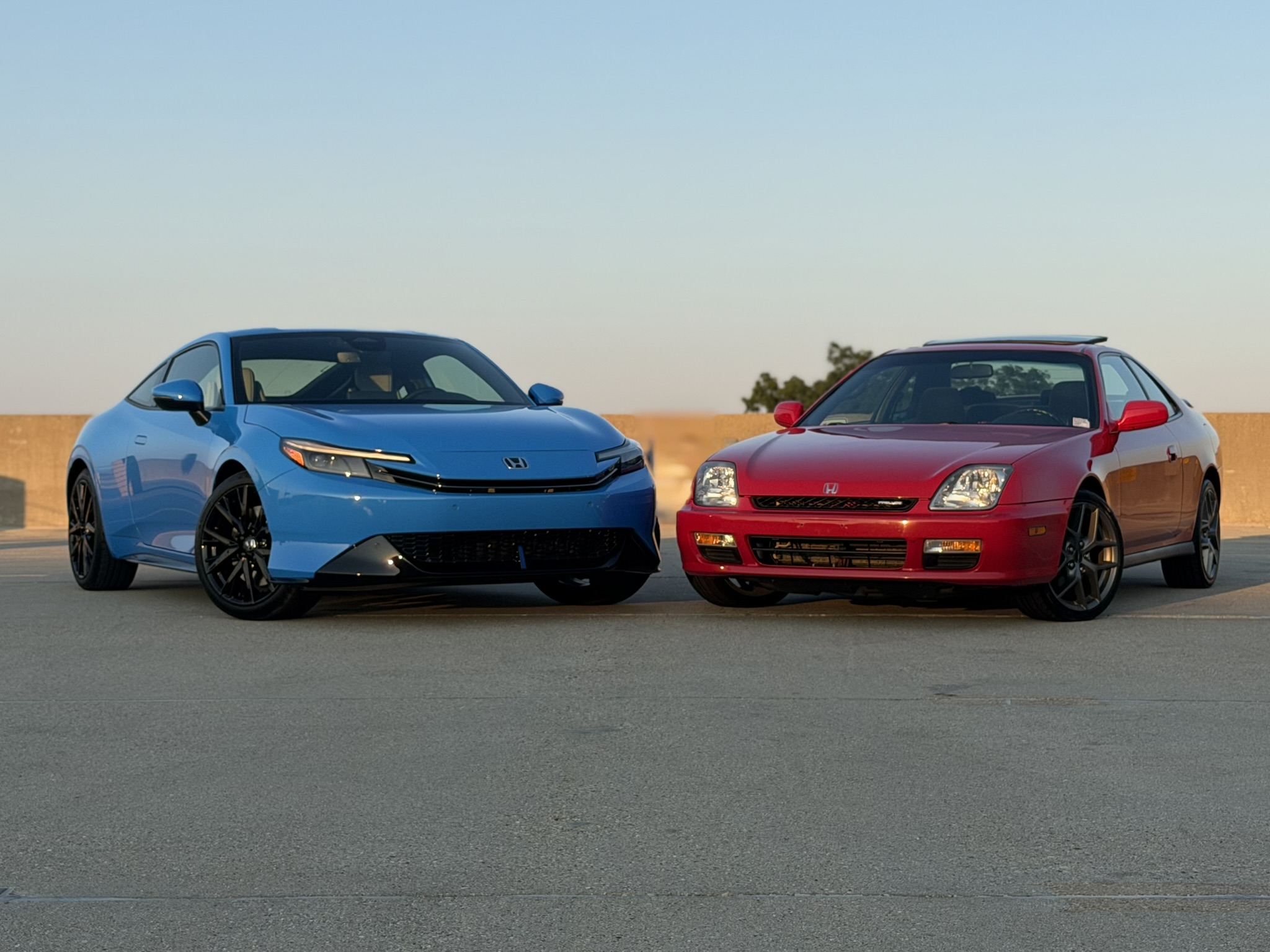
It’s been 25 years since we’ve seen a new Honda Prelude in dealer showrooms, but the iconic nameplate is back with mixed opinions. I’ll start by saying I’m a Prelude guy, I still own a 1999 Honda Prelude (the fifth generation that ceased production in 2001) which may make me slightly biased, but also critical. When Honda announced the return of the Prelude, I was thrilled to hear the news regardless of what was under the hood. The new Prelude comes standard with a 2.0-liter four-cylinder hybrid system, producing 200 horsepower and 232 lb-ft of torque. It’s a bit evolved from the 2.2L 4-cylinder with VTEC in my car and it drives the front wheels through Honda's direct-drive hybrid transmission. Unlike my generation, there is no conventional automatic or manual transmission.
Honda has always limited the trims of Prelude and now it’s just a singular model with a few optional packages/accessories you can add. Optional additions include wheel upgrades, underbody spoiler, rear spoiler, black emblems and a few other minor things. Prices start at $42,000, which on the surface seems high for a coupe that produces only 200 hp. However, I looked closer at the numbers and when my 99 Prelude was new it went for around $24,000, which when adjusted with an inflation calculator equals about $47,000. While I think starting under $40k would have been more competitive with models like the Toyota GR86, Subaru BRZ and Mazda MX-5 Miata, the Prelude does have a higher overall quality to it compared to those vehicles. Afterall, there aren’t many two door coupes left in the market in general… outside of what’s been mentioned, the only other real options are Dodge Charger, Ford Mustang, and Nissan Z outside of luxury and high-performance segments. After spending a week in the new Prelude I would buy one and here’s why…
Exterior Styling:
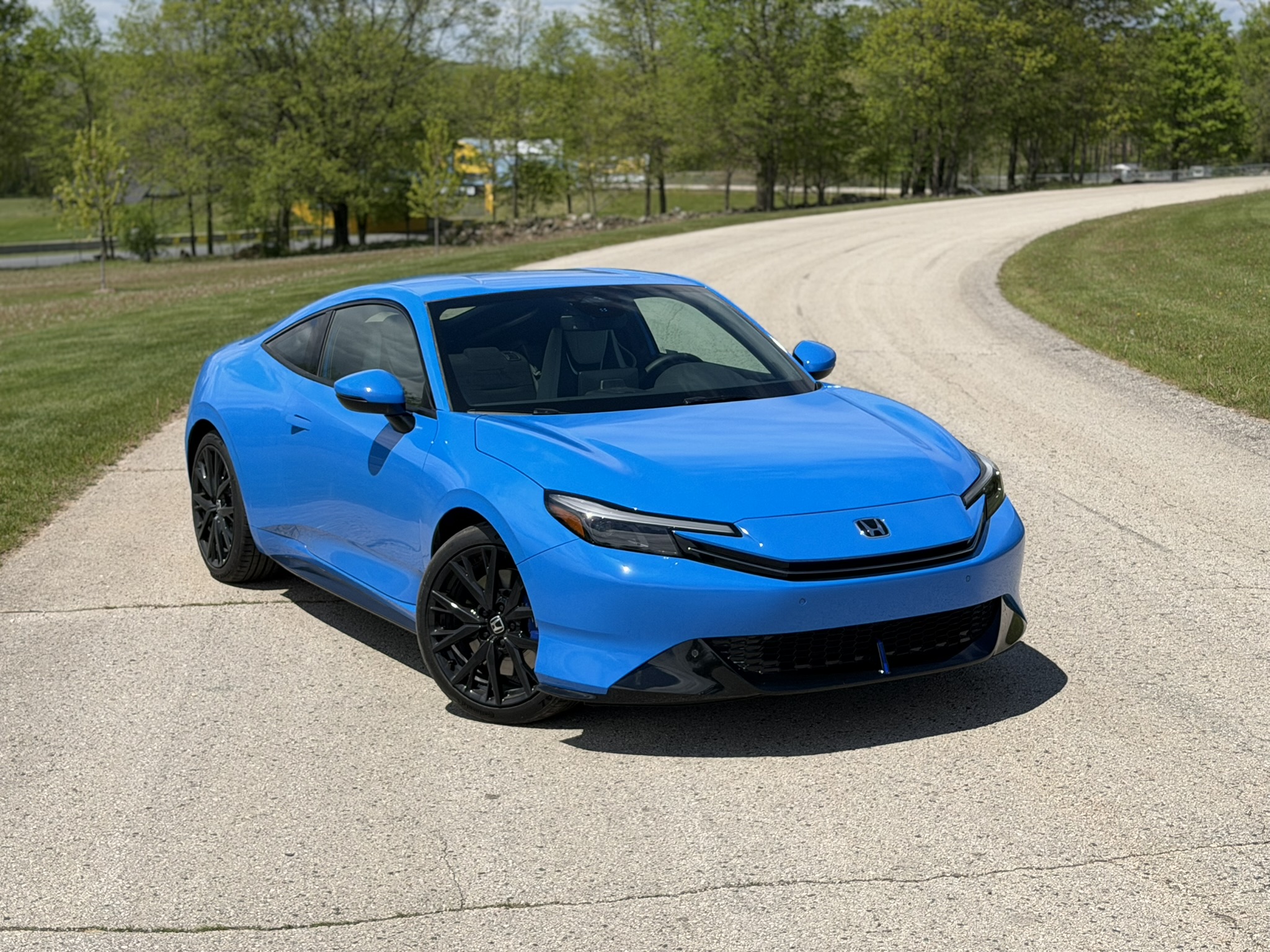
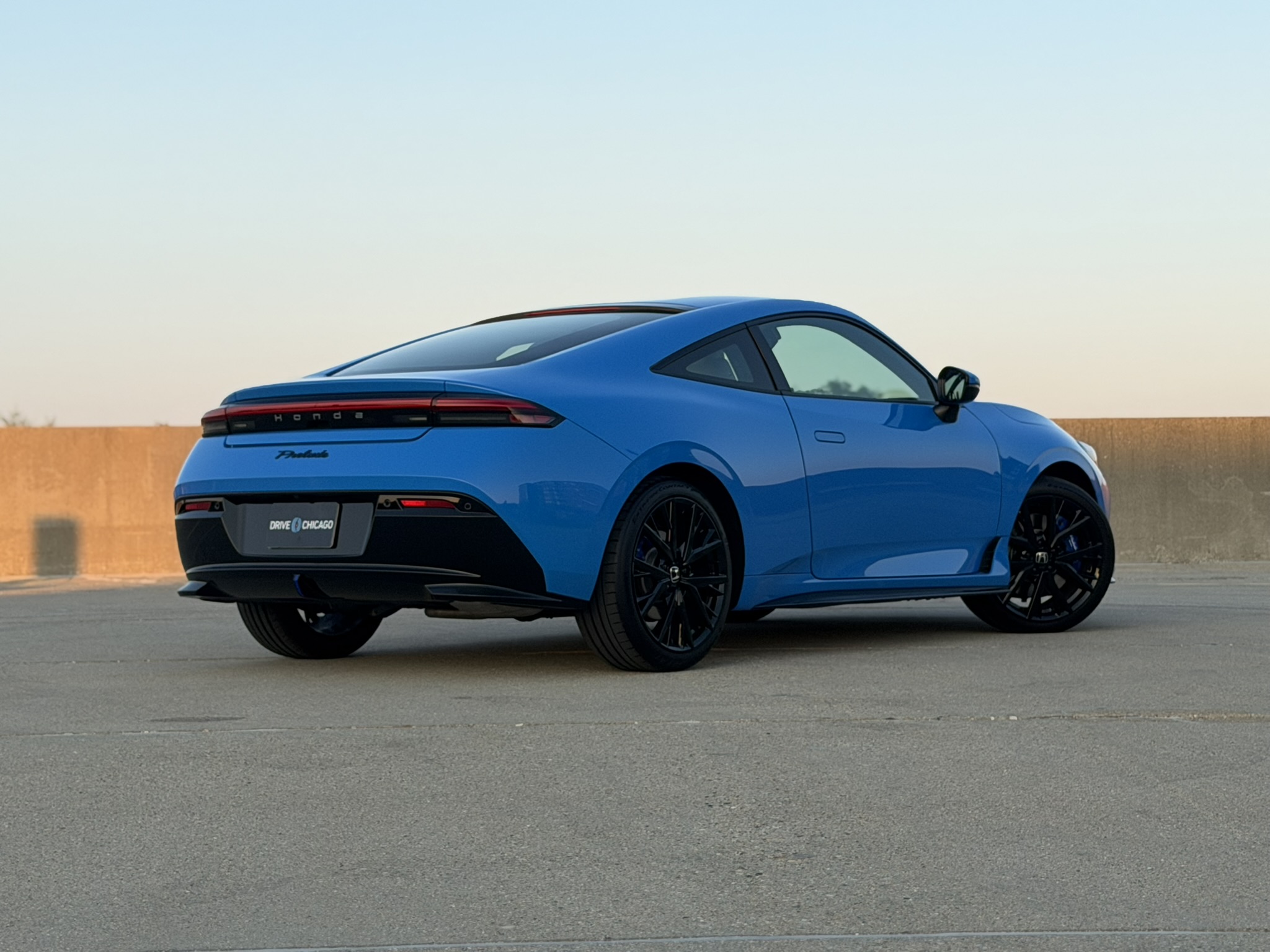
The new Prelude is a head turner and finished in the Boost Blue I had quite a bit of people asking me about it. In my opinion, there’s very little commonality with the previous 5th generation but more of an evolved 4th generation look. It even uses the same Prelude font on the back that was used in the 4th gen models from 1992-1997. Honda gave it a low, sleek fastback-coupe silhouette with a long hood, short rear deck and broad stance. The design successfully separates it from the Civic despite sharing underlying architecture.
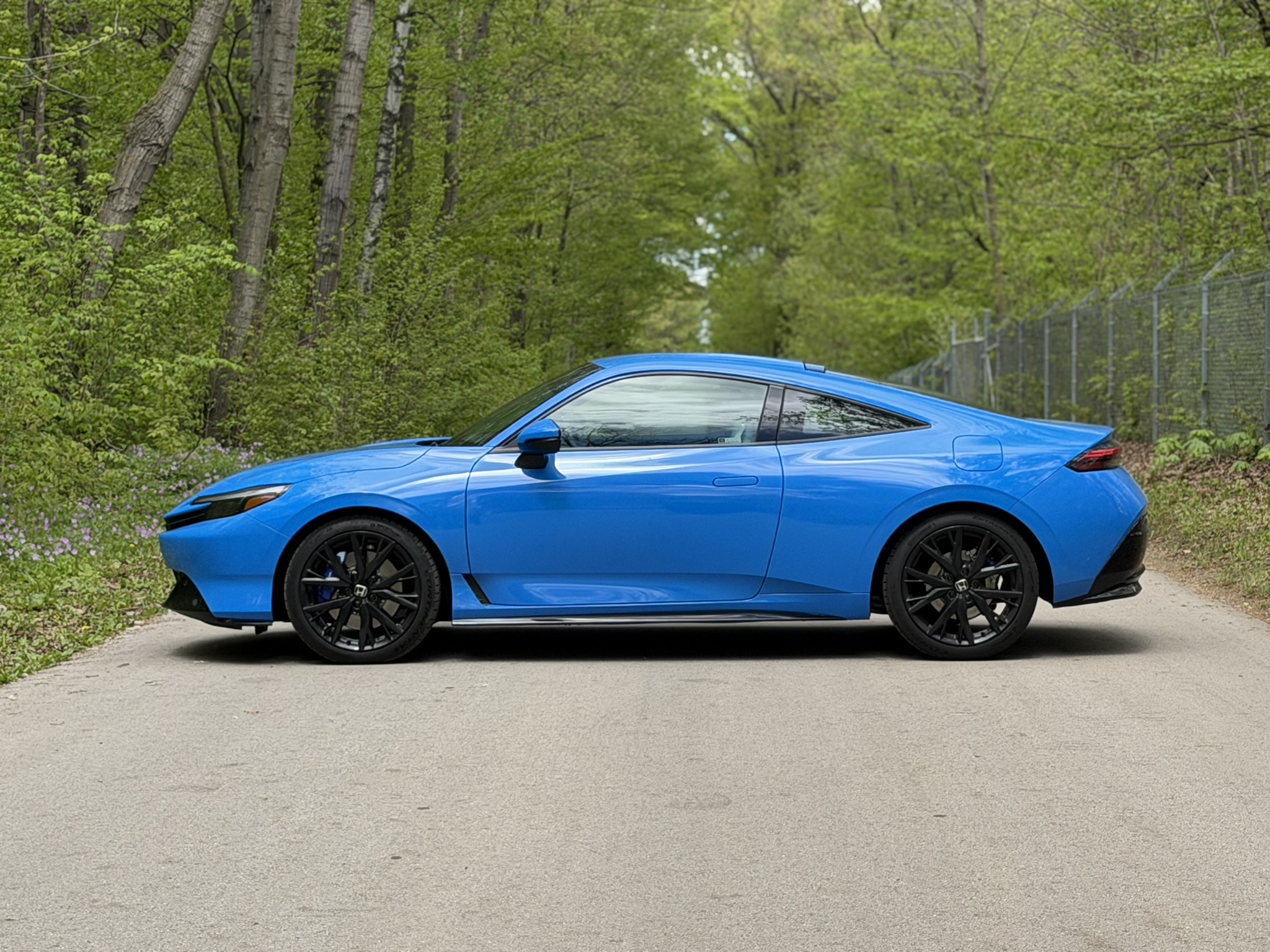
Up front is its most controversial design area as it does share a lot of similarities to the current Toyota Prius (which is not something Prelude buyers desire, even if the new Prius looks good). The front nose flows into slim LED headlights, while the relatively smooth fascia avoids the oversized grilles and aggressive openings common on many other new performance cars. It has a “smiling” look that is more sophisticated than say the Honda Civic Type R which is more aggressive. The side view is probably the Prelude's strongest angle. The car sits low and wide, with a long, sweeping roofline that creates the visual impression of a traditional coupe. Honda's designers specifically emphasized a clean roofline flowing from the low front nose. It’s about 4.5 inches shorter than a Civic sedan, but also 2 inches wider. Around back, continues the fastback theme with a broad, clean hatch and slim horizontal lighting that stretches across the back. Just like the previous generation, the Prelude name is on the bumper just above the license plate. The hatchback is particularly important because it gives the Prelude a more useful cargo opening without destroying the sleek coupe profile. It’s only available in five colors that include your basic shades of black, gray, white, red, and the Boost Blue. One other option is a two-tone version in Winter Frost Pearl with a black roof for an added $655.
Wheels/Tires:
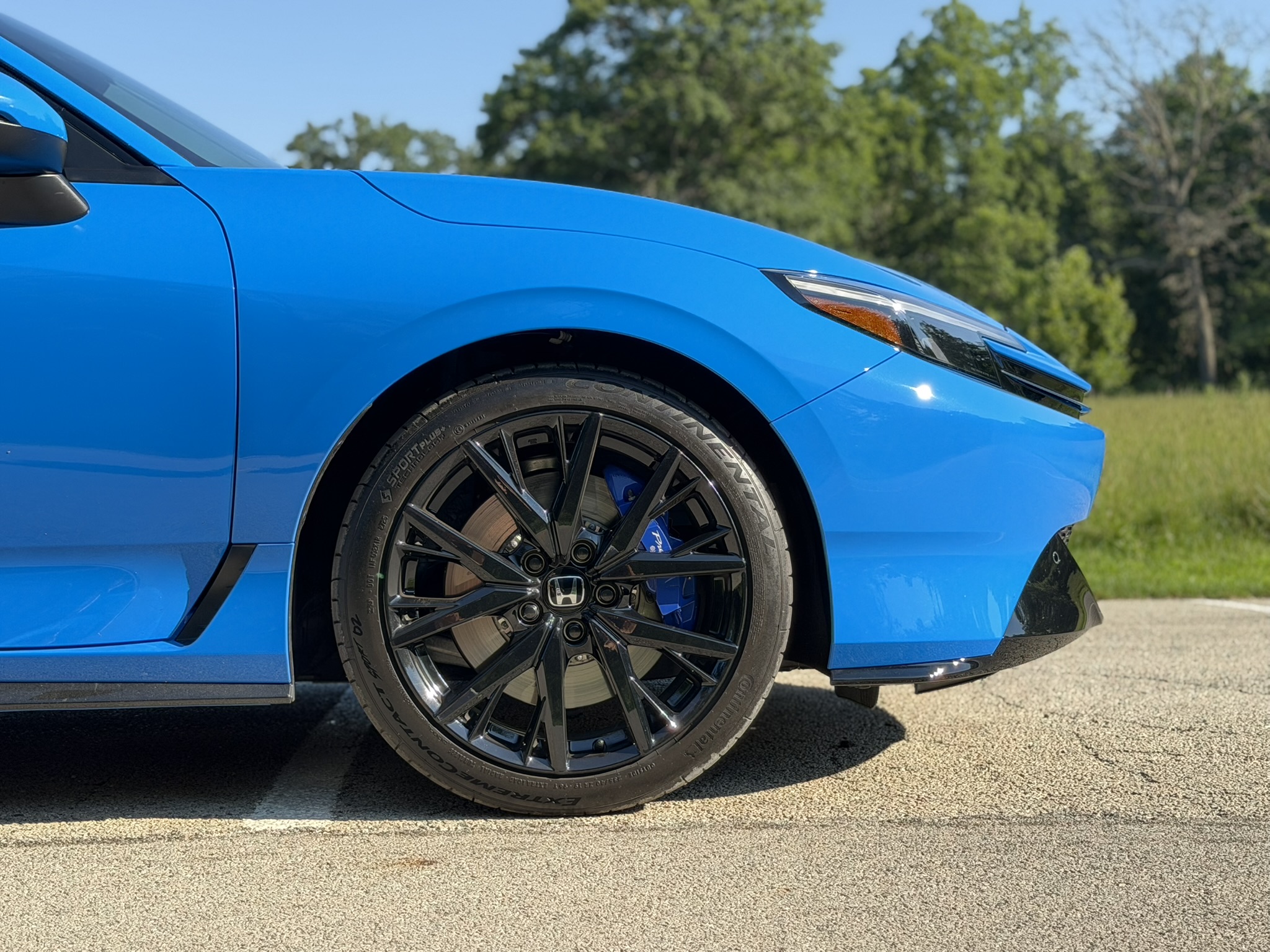
The Prelude rides on 19” Berlina Black alloy wheels with 235/40R19 all-season tires. That's a substantial wheel/tire package for a compact two-door and helps fill out the car's wheel arches. The black wheels also reinforce the Prelude's sporty appearance, although some buyers may prefer a brighter finish to provide more visual contrast. Optional are 19” Gloss black Machine-Finished directional alloys that feel like a modern version of the 16” wheels from my 99. These optional wheels come wrapped in Continental Extreme Contact Sport 235/40ZR/19 tires and at the cost of $2,156.
Powertrain:
Honda switched things up with this new Prelude and borrowed the powertrain from the Civic Hybrid. Under the hood is a 2.0-liter four-cylinder hybrid system, producing 200 horsepower and 232 lb-ft of torque. It continues to be a front wheel drive vehicle but does not have a conventional automatic or manual transmission. In most driving situations, the electric motor takes the lead in powering the front wheels, while the gasoline engine supplies additional propulsion or serves as a generator. Shifting between EV, hybrid, and internal combustion modes is remarkably seamless without any hesitation. From a standstill, it will propel from 0-60 MPH in around 6.5 seconds. It’s not particularly fast, but it is quite smooth. Comparatively, the Toyota GR86 nets 228 horsepower and will get from 0-60 MPH about a second faster at 5.4 seconds (and it starts at $31k).
Despite its lacking overall power, the 232 lb-ft of electric-motor torque gives the Prelude good response at lower speeds, and acceleration from a roll is reasonably strong. But the car's roughly 3,200-pound curb weight and relatively modest horsepower become more apparent as speeds rise. The Prelude is quick enough for everyday driving and enjoyable on winding roads, but the chassis can handle considerably more power than Honda gives it. This is easily the car's biggest performance weakness.
S+ Shift:
Honda implemented a new S+ Shift in the Prelude which is a software-based system that simulates the feel of an eight-speed performance transmission. The important thing to understand is that there isn't actually an eight-speed gearbox shifting underneath you. Instead, Honda manipulates engine rpm, electric-motor torque/regeneration, throttle response and sound to recreate the sensations of gear changes. When you press the S+ button on the center console, the instrument cluster's power meter changes to a tachometer and the system simulates upshifts and downshifts. Steering-wheel paddles allow the driver to request the simulated shifts which change engine rpm and electric-motor behavior to create the sensation of changing gears. Downshifts include simulated rev matching, and engine sound becomes more pronounced, particularly in Sport mode. Powertrain response becomes sharper in GT and Sport modes. While it doesn’t actually add any power to the performance, it’s a valiant effort in artificially making this new hybrid feel more Prelude-like.
Ride/Handling:
All thoughts of lacking power disappear when you start driving the Prelude on winding roads. The Prelude handles the road so well thanks to the key suspension (adaptive dampers and multilink rear suspension) and Brembo braking hardware it borrows from the Civic Type R. Steering response is quick and precise, giving it an eager feel when entering corners. That hardware gives it a level of composure that goes beyond what you'd normally expect from a hybrid coupe. It grips the roadways so well, inspiring the confidence to drive even more aggressively. The ride is well-balanced despite being a front wheel drive coupe. One of the car's most rewarding attributes is its steering. It provides a more authentic sports-coupe sensation than the Civic Hybrid. It gives the driver a clear sense of front tire direction, which substantially boosts the Prelude's composure on winding roads.
The Prelude comes with three drive modes which essentially adjust the adaptive dampers known as Comfort, GT, and Sport. Comfort is the softest and best for daily driving while GT is a good middle ground between comfort and responsiveness. Opt for Sport for the most engaging drive with firmer damping, sharper steering, and more aggressive response. The overall ride is smooth and well-poised. While competition like the Toyota GR86 feels a bit wilder and looser, the Prelude has a much more sophisticated driving presence. The ride quality is impressive all around making this an easy and fun to drive coupe.
Fuel Economy:
When it arrived with a full 10.6-gallon tank, the Prelude offered a driving range of around 450 miles (one of the big benefits of the hybrid system). EPA estimates are 46 / 44 / 41 MPG city/highway/combined. After a week of suburban driving, I averaged about 43 MPG. It runs on regular grade fuel which is a plus compared to my 99 Prelude that recommends premium. The tank is relatively small, but the range is good, giving you nice value at the pump.
Interior:
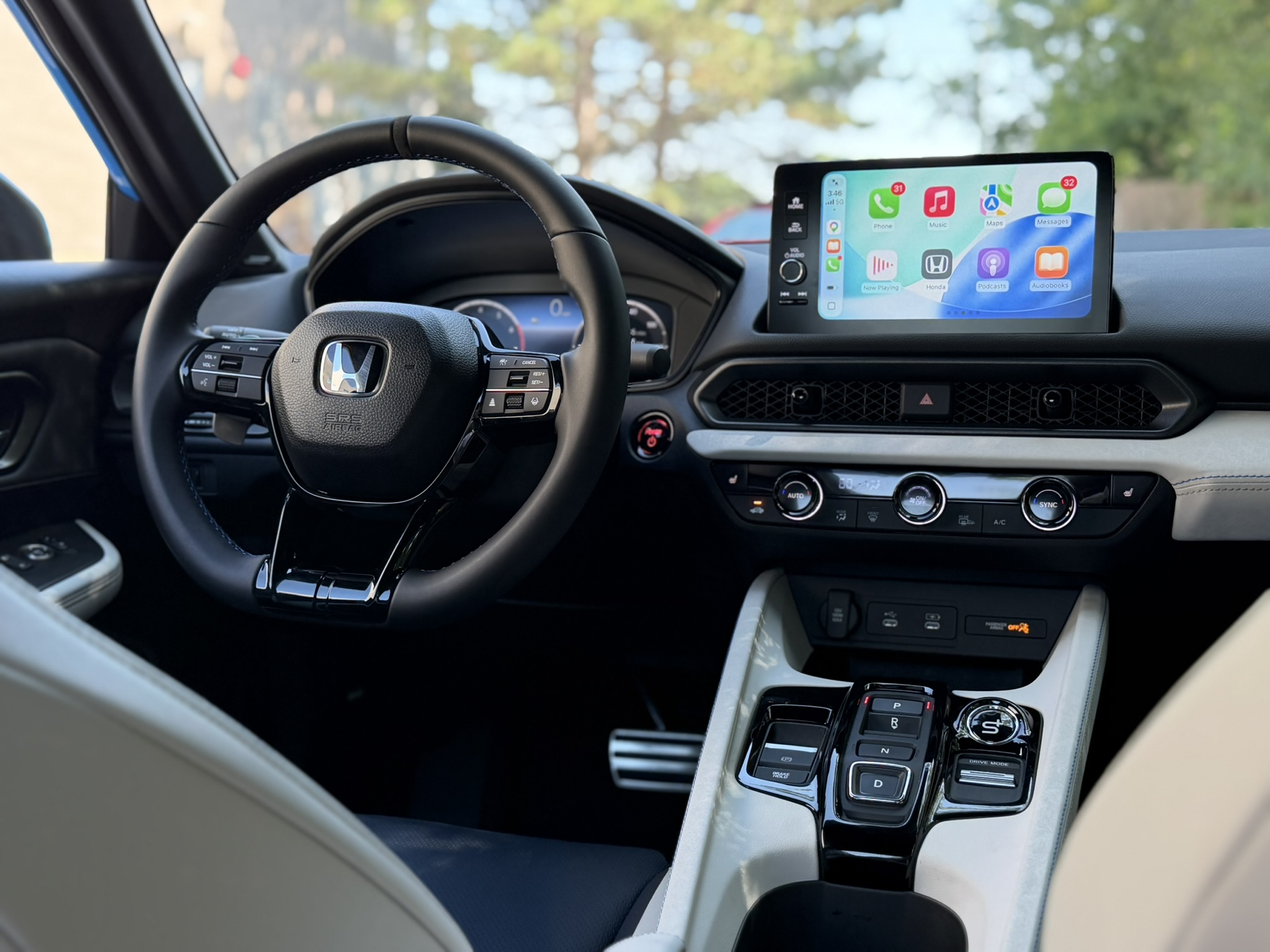
Hopping inside, you’ll be pleasantly surprised in the new Prelude with a simple, but high-quality interior. While Honda borrows much of the basic architecture from the Civic it does add sportier seats, upgraded trim, contrasting stitching and a more driver-focused atmosphere. The dash layout shares familiar mesh-style air vents found in other Hondas. Drivers will face a 10.2” digital instrument cluster with clean, crisp graphics and a leather-wrapped steering wheel with a flat bottom. At the center of the dash is a 9” touchscreen display that includes a volume control knob (same one found in other Honda vehicles). One thing missing from the center console is that traditional shifter (both automatic or the manual one) and in its place are a column of buttons for electronically selecting gears. For me, any kind of sports car feels better with a shifter (preferably manual).
Other unique touches include synthetic-suede-type accents, and the passenger-side dashboard features the name Prelude embroidered in the leather, a nice touch. The available two-tone Blue/White leather interior gives the cabin a particularly upscale appearance which complemented the Boost Blue outside well. One thing that’s notably missing from the new Prelude is a sunroof. Since its debut in 1978, a sunroof has always been available and in most trims standard. While the shape of the roof may prohibit it, I think Honda should have worked to keep this feature part of the package. The Prelude's interior successfully walks the line between sporty and upscale. It’s comfortable up front, technologically modern, easy to operate and surprisingly versatile.
Technology:
The Prelude has a solid technology package without turning the cabin into a touchscreen-only environment. At the center of the dashboard is a 9” color touchscreen with a physical volume knob. The 9” screen isn't particularly large by today's standards, but that's appropriate for the Prelude. The system incorporates Google built-in, including Google Assistant, Google Maps and Google Play apps. Also standard is wireless Apple CarPlay and Android Auto which worked seamlessly. A wireless device charger is also standard in the center console under the main touchscreen. Other tech features include Bluetooth HandsFreeLink and audio streaming, HondaLink connected services, Wi-Fi hotspot capability, HD Radio, Alexa Built-in, and USB-C connectivity.
Every 2026 Prelude gets an 8-speaker Bose premium audio system with a subwoofer. That's a nice upgrade for a sporty coupe and means buyers don't have to pay extra for a premium stereo. What you get is the only option for Prelude buyers, there is no upgraded tech package available. The Prelude comes essentially fully loaded from the factory, which simplifies ordering but limits customization.
Seating:
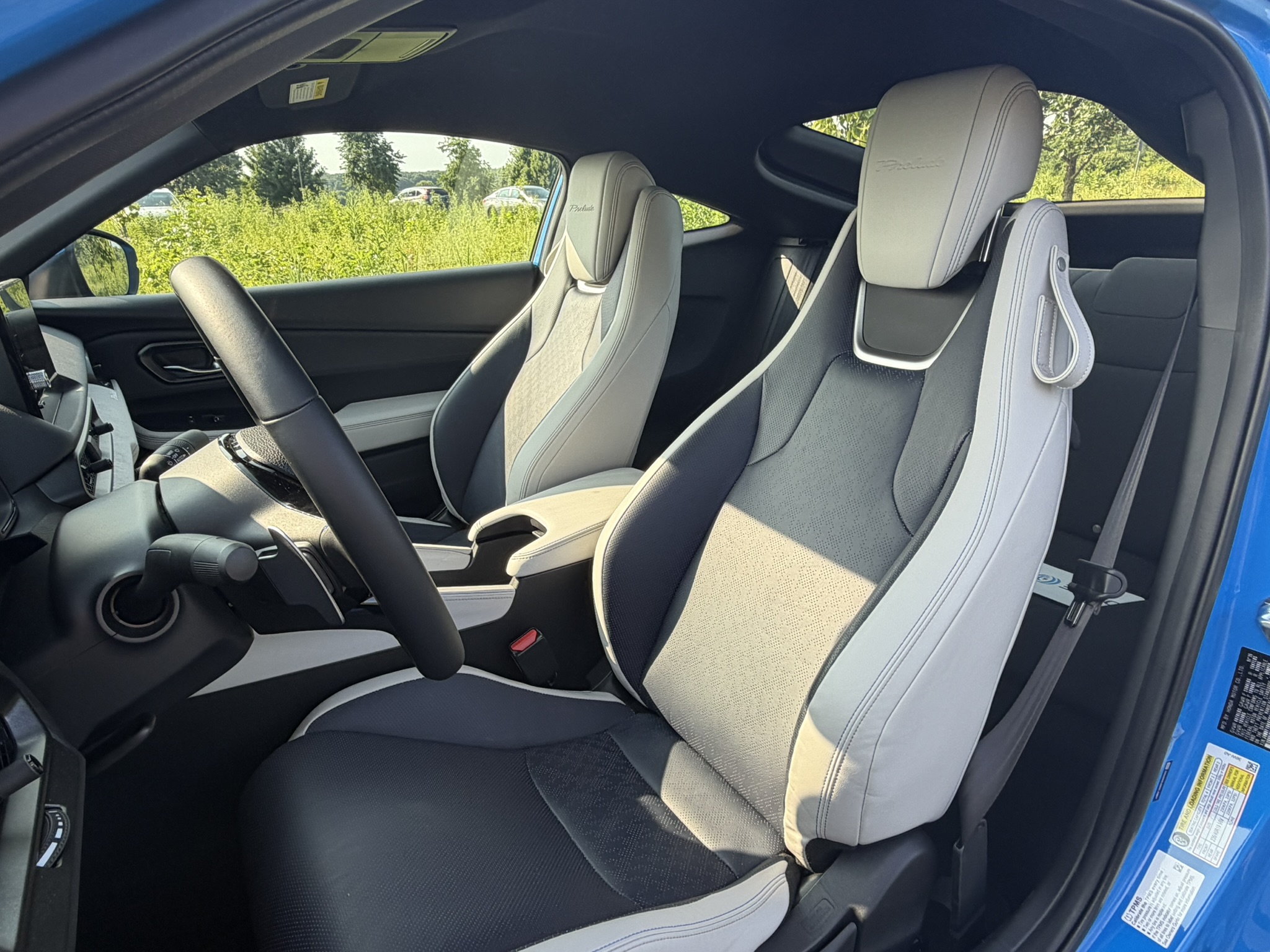
The Prelude continues its traditional seating with a 2 + 2 setup (two in front, two in back). The front seats are a highlight. Honda designed the driver and passenger seats somewhat differently: the driver's seat emphasizes body support, while the passenger seat prioritizes comfort. They're well bolstered without being excessively aggressive. Both front seats are heated, but they're manually adjusted, which was surprising considering the car’s price. There's no available power seat, ventilated seats or heated steering wheel which are important features to many consumers and standard in some cars that cost lost. Up front there is good head, leg and shoulder room. I felt more comfortable in the new Prelude (space wise) than in my old one. Visibility is good, the seats and steering wheel have enough adjustment to find a comfortable driving position.
The back seats are another story… because Honda turned it into a lift back (which I love) head room in back is limited. Even my 14-year-old daughter was hitting her head in the back and she’s only 5’ 3”. That said, the Prelude is not a vehicle most would or should buy if they need to use the back seats on the regular basis. It is a sports coupe afterall, the rear seats are more of a bonus space than anything else. Officially, there is 32.0 inches of rear legroom, but just 33.1 inches of headroom. Comparatively, my 99 Prelude offers a little more space in the back - but not much.
Cargo:
The Prelude provides 15.1 cubic feet of cargo space with the rear seats in place. That's a generous amount for a vehicle of this type and makes the Prelude considerably more useful for everyday errands than you might expect. The rear seats split 60/40 to give even more flexibility in cargo hauling, especially with the wide opening rear hatch. There is sufficient room to haul quite a bit in the back, definitely more user-friendly than a traditional trunk space. Back in 99, my seats didn’t even fold down. The liftgate is a manual one, but it’s not too heavy. If you’re shorter though, it may be a stretch to pull it back down. There is also some shallow under-floor storage as well.
Safety & Driver Assistance:
The Prelude comes standard with Honda Sensing technology that includes all the necessities such as:
- Adaptive Cruise Control with Low-Speed Follow
- Collision Mitigation Braking System
- Forward Collision Warning
- Road Departure Mitigation
- Lane Departure Warning
- Lane Keeping Assist
- Traffic Jam Assist
- Traffic Sign Recognition
- Blind Spot Information System
- Rear Cross Traffic Monitor
- Rearview camera with dynamic guidelines
- Parking sensors
- Low-Speed Braking Control
- Post-Collision Braking System
- Driver Attention Monitor
- Auto High Beans
These features are complemented by Prelude’s electronic driver aids and camera-based systems. The blind-spot monitoring and rear cross-traffic alert are also valuable because the Prelude's low, sleek coupe body can compromise rearward visibility compared with a sedan or SUV. The front and rear parking sensors are another welcome feature. They're particularly useful when judging the ends of the car in tight parking spaces can be difficult. Everything with Prelude is standard, so there’s nothing else to add for additional costs.
Final Statement:
The new Prelude has certainly raised a few eyebrows for different reasons. During my time in it, I had more than a few random strangers stop me to ask about the car and complement its design. Bringing the Prelude name back was the right move for Honda and I think they did a respectable build on this new model. 25 years is a long time to pass so some consumers (and journalists) may have forgotten that Prelude was never intended to be a competitor to the likes of the Toyota Supra or Nissan Z which everyone is doing now. The Prelude was more competitive with the Toyota Celica, Nissan 240SX, and Mitsubishi Eclipse of that generation.
The Prelude is a sports cruiser that continues to handle the roads like a dream. Could it use more power… absolutely. Would I love to see a manual transmission… absolutely. However, in today’s auto market, manufacturers are not building many manuals because the buyers aren’t there, so I get it. I’m hopeful that Honda is working on a performance variant with more power, but at this time nothing has been confirmed. That said, I wouldn't be surprised if one showed up now that that car has been launched. This new Prelude looks the part and is built with the quality fit and finish we’ve come to expect from Honda. I truly enjoyed driving this vehicle and suspect that most who give it a chance and get behind the wheel will too.